
PLC Controlled Bridge Saw: Features and Benefits Explained
TL;DR:A PLC-controlled Bridge Saw runs its cutting cycle from a stored program instead of from relays or from a person at the panel, so the 500th slab comes out like the first.The features that earn their keep are automatic cycle sequencing, saved job recipes, coded fault diagnostics, and safety interlocks the controller refuses to bypass. Because the program — not the operator's memory — is the source of consistency, a PLC saw trims training time and the miscut scrap that would otherwise waste a 3 cm granite slab of about 518 kg. The catch is real: it only pays where jobs repeat or change often, and a shop cutting two square-edged products all year is better off with a simpler saw.
Quick Answer
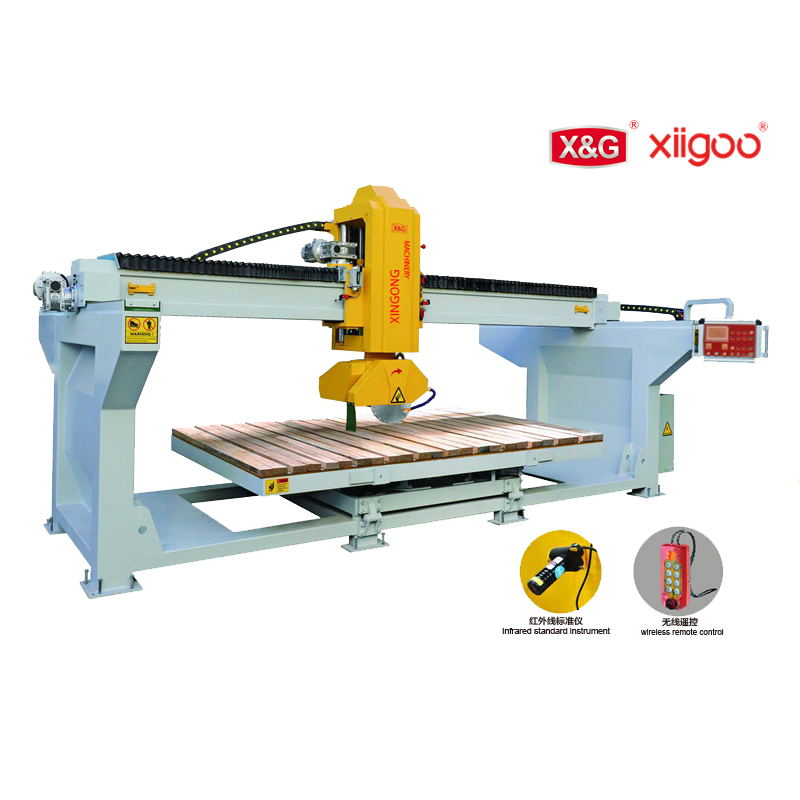
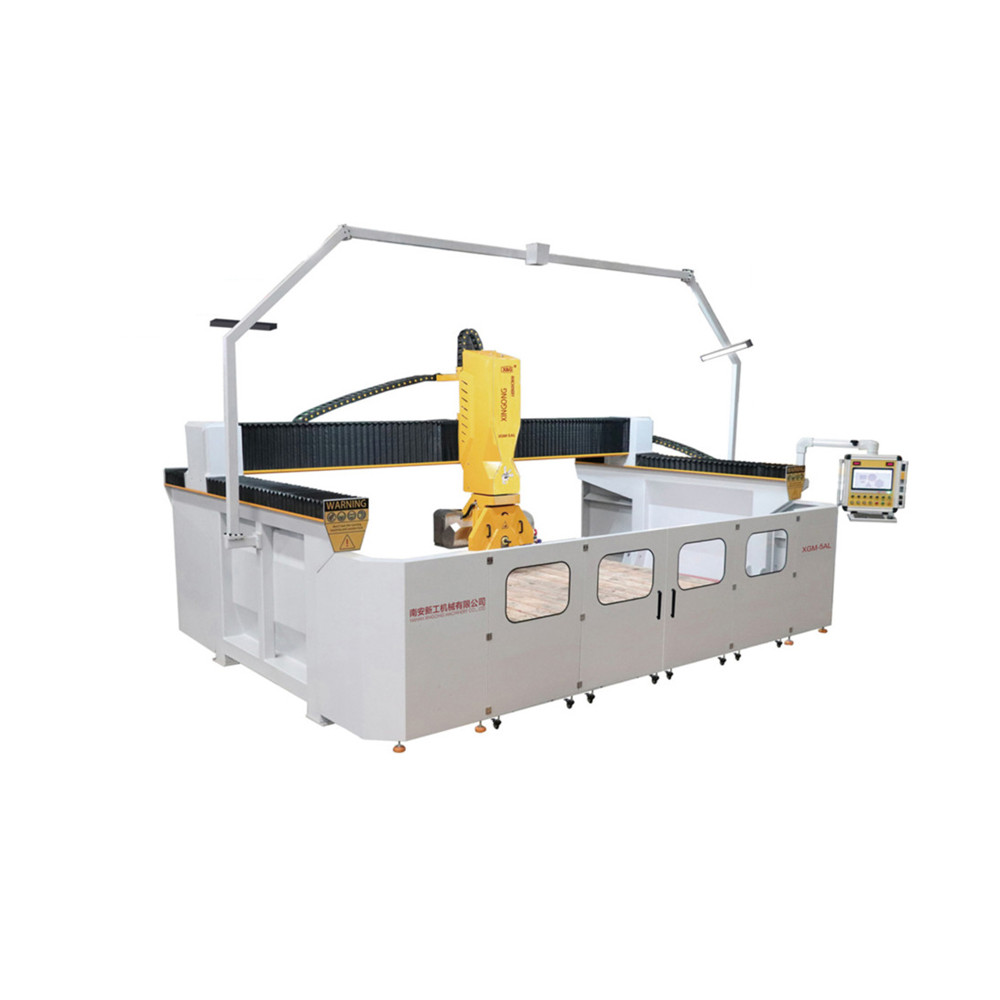
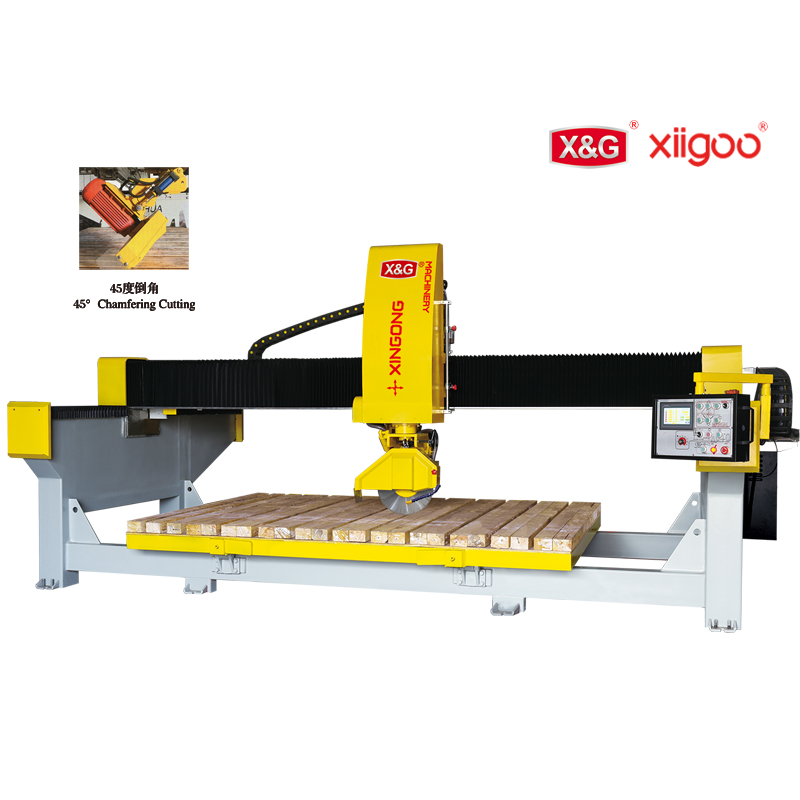
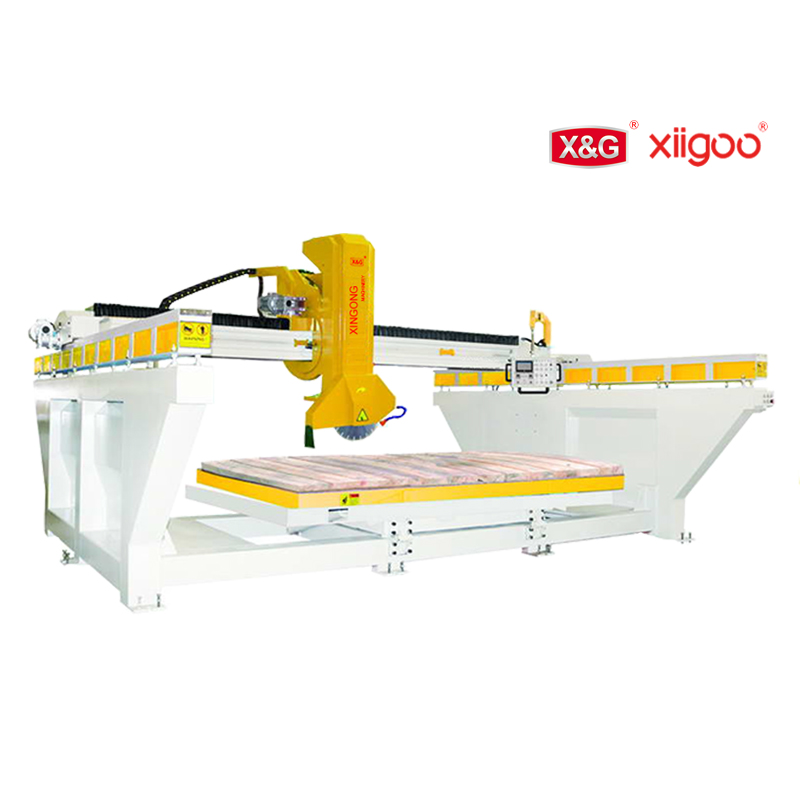
A PLC-controlled bridge saw is a stone saw whose motions — bridge travel, head traverse, blade plunge, table rotation, and the water and clamp sequence — are commanded by a programmable logic controller running a saved program, not by a human stepping through switches. The controller reads its sensors, decides the next move, and repeats the identical sequence on every slab, so a 3 cm granite slab of 3.2 × 2.0 m cut at a granite density near 2,700 kg/m³ lands the same whether it is slab 1 or slab 500.The payoff is consistency across shifts, faster changeover, faults that name themselves, and safety functions enforced in software. Because the operator stops being the variable, miscut scrap falls — and each avoided miscut saves both the material and the handling of a 518 kg slab. The honest limit: a PLC saw only pays when the work repeats or changes often.
Why So Many Bridge Saws Cut the Same Job Differently Every Time
If you run a relay-controlled or manual bridge saw, you already know the symptom. The same job, cut on Monday by one operator and on Tuesday by another, does not always come out identical. The blade parks in a slightly different place, the traverse drifts a little faster when someone is chasing a quota, and an edge that measured true in the morning is a hair off by the afternoon. On a plain square countertop that variance hides; on a tight mitre or a book-matched pair it does not, and the shop pays for it in rework, in scrap, and in the awkward call to a customer whose second order does not match the first.
That drift is rarely a mechanical fault. The machine is perfectly capable; the process is simply living in an operator's head rather than in the machine. A PLC does not make a bridge saw cut sharper or faster — it makes the saw cut the same way every single time, because the sequence that used to live in a person's memory now lives in a program the controller runs step by step. Everything else on this page follows from that one idea.
What a PLC Replaces, in Plain Language
A programmable logic controller is a small industrial computer built to do one job reliably: read inputs, run logic, command outputs — thousands of times per second, inside a hot, dusty, vibrating factory. On a bridge saw it replaces the ladder of relays, timers and manual switches that older machines used, and because it is a program rather than a wiring diagram, changing how the machine behaves means editing code instead of re-running cables. The controller does not know what a countertop is; it knows that sensor A is clear, motor B should run until encoder C reaches a count, and clamp D must close before the blade plunges.
That last rule is the quiet reason many shops move to a PLC. Because the controller owns the sequence, the blade cannot plunge while a guard is lifted or a clamp is open — a rule enforced in software rather than hoped for in a procedure. That is the same principle behind the OSHA machine guarding guidance: the safest safeguard is the one that cannot be switched off by a tired operator at the end of a shift.
The Features That Actually Change Your Floor
Controller spec sheets list dozens of features. On a working fabrication floor only a handful move the needle, and they are worth understanding as day-to-day changes rather than as bullet points.
Automatic cycle sequencing means the saw runs the whole cut once a slab is loaded and a job is selected. Two different crews on two shifts can run the same program and ship identical parts, which is what lets you promise a repeat customer that batch 50 matches batch 1. Saved job recipes turn changeover from a re-setup into a menu pick, so switching from a 3 cm honed granite to a 2 cm polished quartz takes seconds. That matters because quartz runs roughly 5–8% heavier than granite at the same size, and the recipe carries the feed and plunge values that keep the heavier slab from overloading the spindle — a detail an operator remembers until the third coffee.
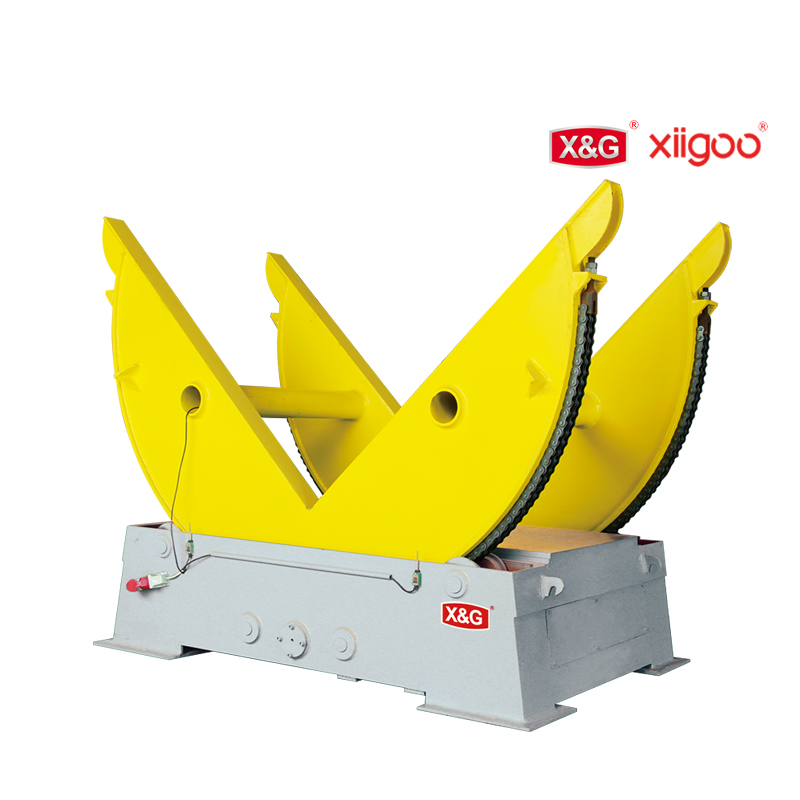
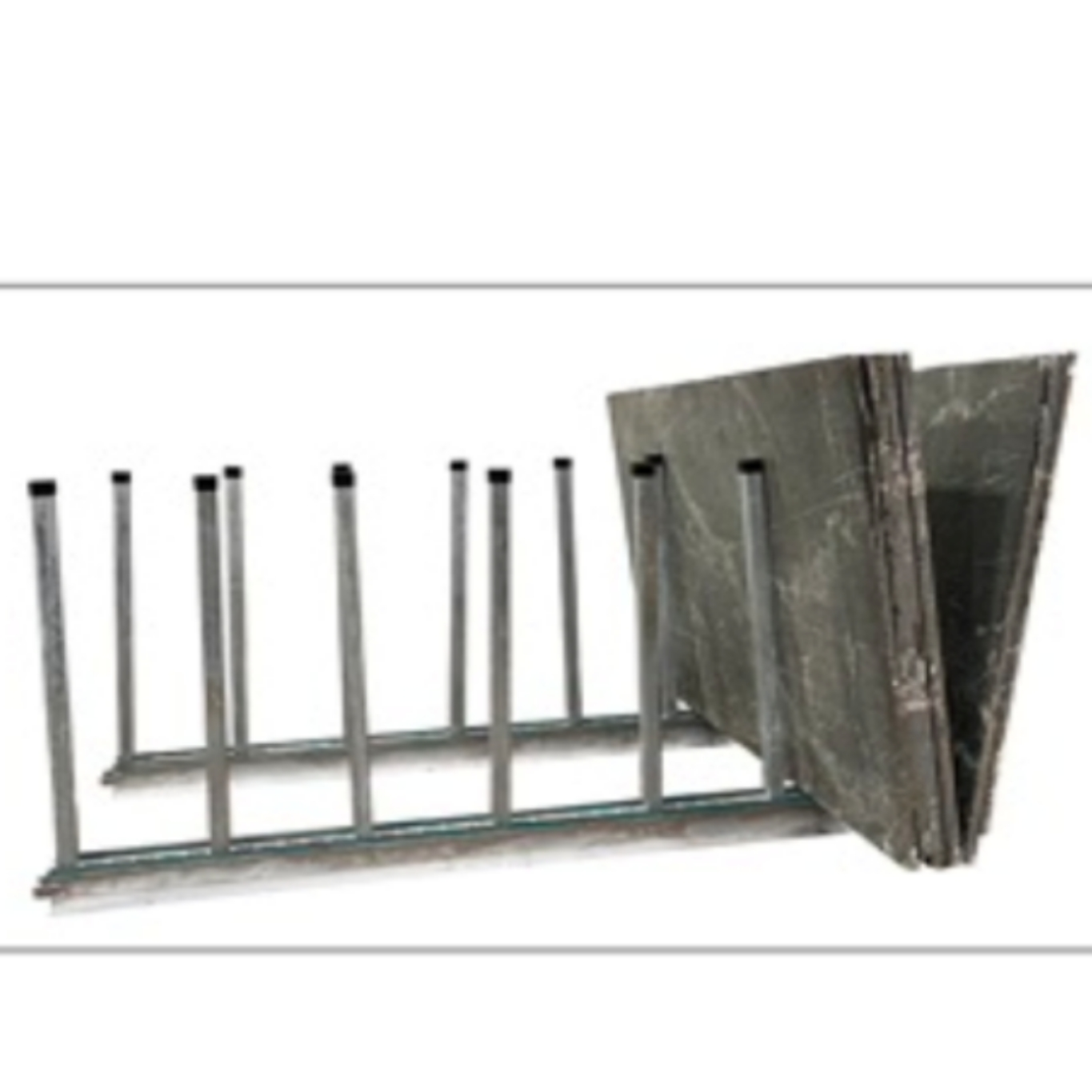
Coded fault diagnostics turn a mystery stoppage into a message on a screen. Instead of a mechanic tracing relays for an hour, the controller names the cause — a limit switch, low air pressure, an over-torque blade — and logs it with a time. Because every stop is recorded, a shop can spot that the same fault repeats every Tuesday and fix the root cause instead of the symptom. And controller-managed safety evaluates gate interlocks, light curtains and e-stops inside safety-rated logic, so they cannot be quietly jumpered out by someone chasing a deadline. That matters most for the person still manhandling a 518 kg slab during loading — the exposure that NIOSH ergonomics research and BLS injury data repeatedly flag for fabrication shops, and the reason a stone turnover machine and a set of stone placement tools belong in the same conversation as the saw itself.
PLC, Relay, or PC-Based CNC — Which Control Do You Need?
| Factor | Manual / Relay | PLC-Controlled | PC-Based CNC Controller |
|---|---|---|---|
| Who drives the sequence | Operator at the panel | Stored program | CAD-CAM toolpath |
| Repeatability across shifts | Low, crew-dependent | High | High |
| Changeover between jobs | Re-setup each time | Recall a recipe | Load a file |
| Fault finding | Trace relays by hand | Coded fault log | On-screen diagnostics |
| Safety interlocks | Hard-wired, easy to bypass | Safety-rated logic | Safety-rated logic |
| Training a new operator | Long, tribal knowledge | Short, select-and-load | Longer, needs path skills |
| Upgrading the logic | Re-wire | Edit program | Software update |
| Best fit | One product, low volume | Repeat jobs, mixed small batches | Complex shaped and nested work |
The columns overlap on purpose, and that trips up a lot of buyers. A PLC and a PC-based CNC controller both beat relays on repeatability and safety; the real difference is that the PLC owns sequencing and interlocks while the CNC layer owns the toolpath. Most modern bridge saws therefore run both at once rather than one or the other, which is why across our own stone cutting machine range the honest question is never "PLC or CNC?" but "which layer is this supplier actually quoting?"
How to Read a Bridge Saw Quote Without Getting Sold To
Suppliers love the word "PLC" because it sounds modern and costs them little to print. The label tells you almost nothing on its own. Before you compare two quotes on price, ask these — and a supplier who dodges them is telling you something:
- "Is it a safety-rated PLC with certified safety functions, or just a controller doing sequencing?" Only the first protects the operator; the second is a sequence box with a good brochure.
- "Will I get the program, the wiring drawings and a backup?" No documentation means vendor lock-in — the day you need a change, you are paying their engineer or replacing the machine.
- "Show me the fault list and the diagnostics screen." A real PLC saw tells you why it stopped; if the demo has no fault display, the diagnostics are marketing.
- "Can I run my own material, at my own thickness, on the demo?" A saw that cuts the supplier's sample beautifully may still struggle with your 3 cm granite or your heavier quartz.
- "Who stocks the spare boards locally, and what is the response time?" A controller is only as good as the support behind it, because a dead board stops the whole line.
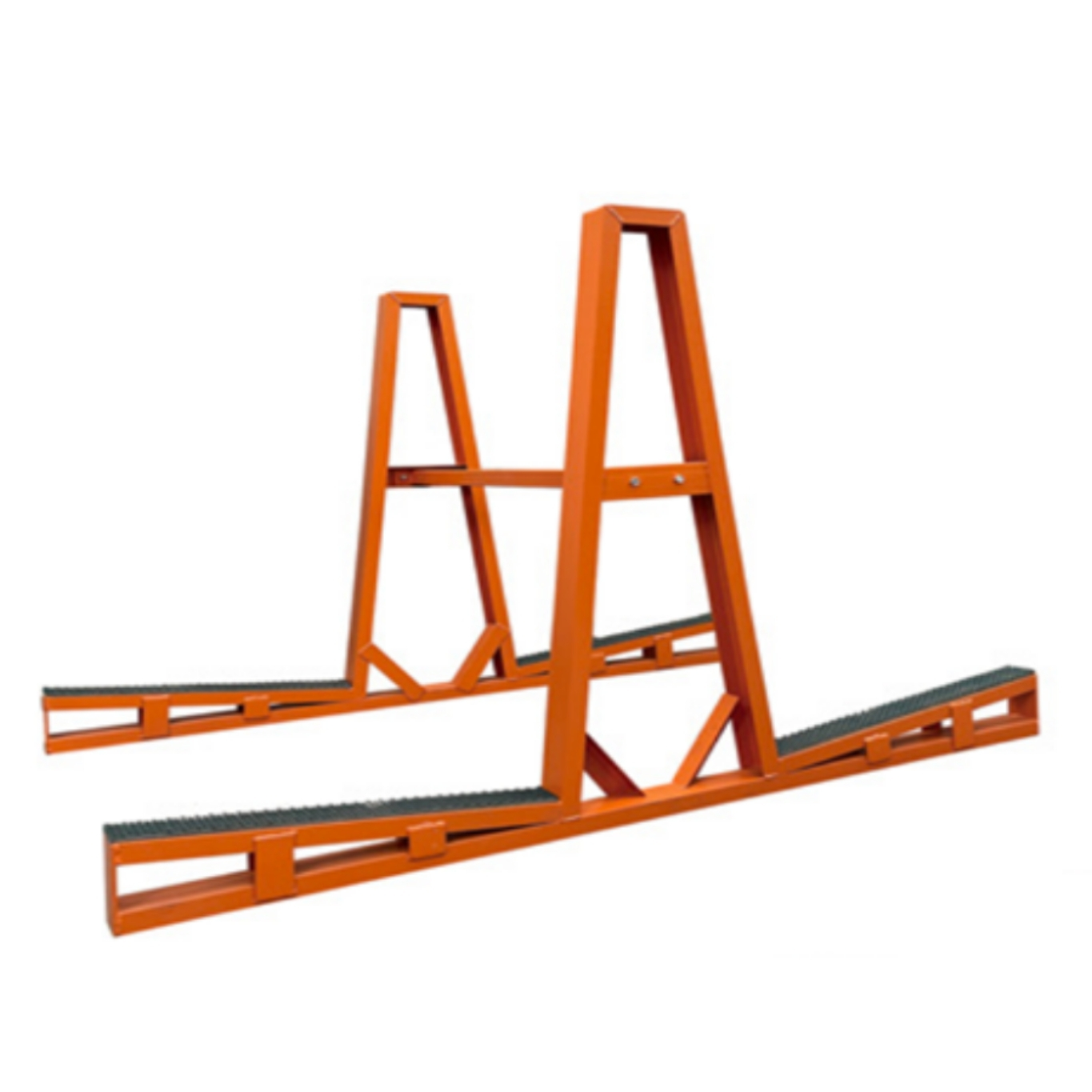
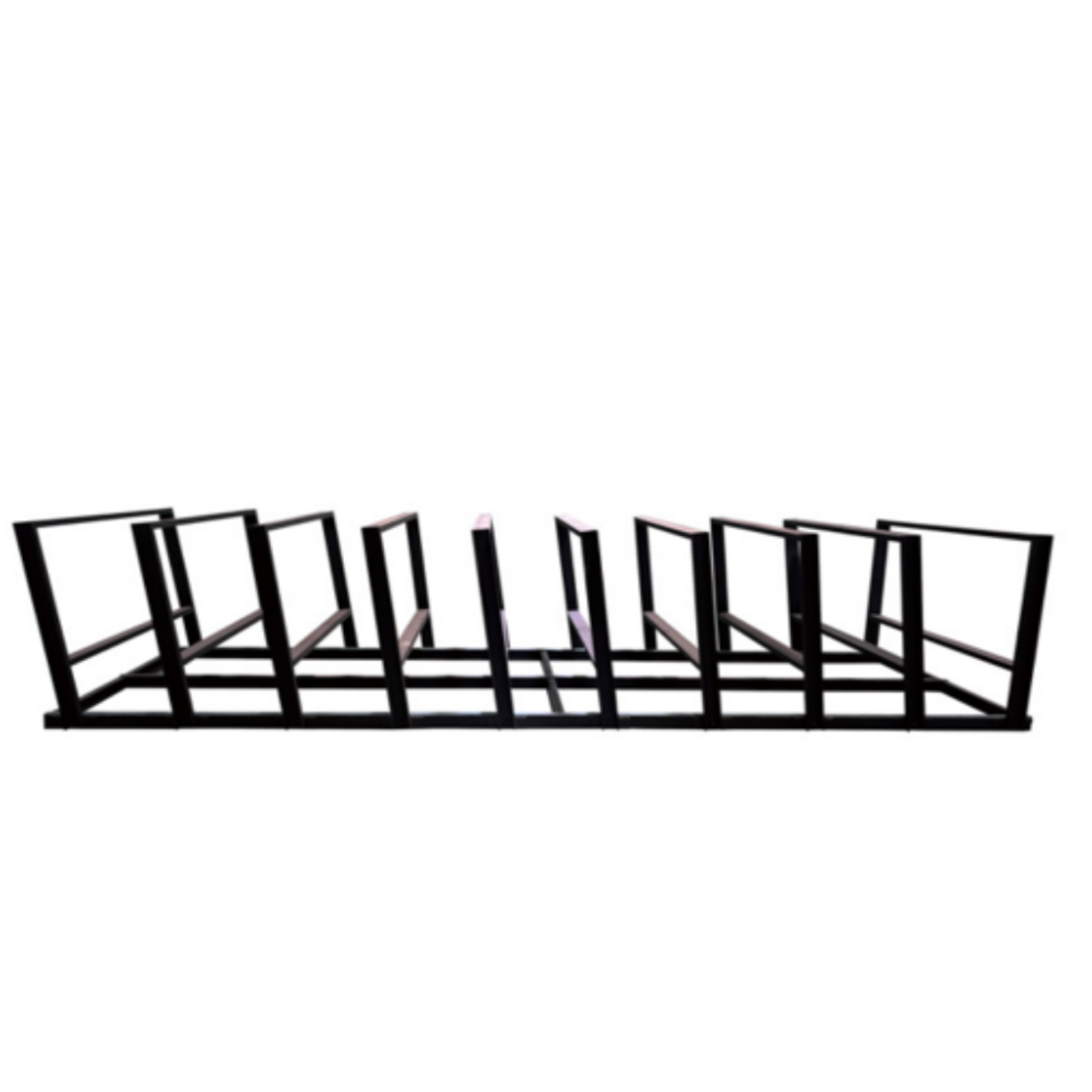
And keep the bigger picture in view while you compare. A saw is only as fast as the slowest step around it, so a perfectly programmed machine still bottlenecks if the slab cannot be turned, positioned and moved quickly — which is why a matched handling equipment lineup belongs in the same budget conversation as the saw.
The Three Numbers That Justify the Upgrade
Before you sign, work out three numbers yourself — no spreadsheet required, a calculator is enough.
The first is the scrap you stop making. Manual formula (scrap avoidance): Annual scrap avoided ($) = (Manual miscut rate − PLC miscut rate) × Slabs cut per day × Working days per year × Value per slab ($). Take a shop at a manual miscut rate near 4% and a PLC rate near 1% — a gap of 3%. At 60 slabs a day over 250 working days that is 15,000 slabs a year, and 3% of 15,000 is 450 miscuts avoided annually. At an illustrative slab value of $220 each, that is roughly $99,000 of material kept out of the waste pile every year, before the rework labour and the floor space those rejects would have tied up. Because each avoided miscut is a 3 cm granite slab of about 518 kg, the saving is also 450 fewer half-tonne slabs manhandled to the scrap bin — the handling exposure that MHI material-handling benchmarks and the Natural Stone Institute (density basis ~2,700 kg/m³) use to frame slab work.
The second number is changeover time: how many minutes a re-setup costs you today, multiplied by how often you switch jobs. The third is training: how long it takes a new operator to cut your hardest job to tolerance, and how much of that knowledge walks out the door when they leave. A PLC moves all three in your favour, and together they almost always dwarf the controller's share of the machine price.
When a Simpler Saw Is Still the Right Buy
A PLC saw is not automatically the better machine, and selling one to every shop would be poor advice. If a workshop cuts two square-edged products all year with one operator who knows the panel by heart, the stored recipes and automatic sequencing buy nothing — there is nothing to recall and no one to train. A relay or semi-automatic saw is cheaper to buy and cheaper to keep running, because any electrician can trace a relay while far fewer can debug a program. And for work that is complex but genuinely one-off — a single sculpted arch, a one-time sink cutout — a full PC-based CNC controller with CAD-CAM is the better tool, because the value there is toolpath generation, not sequence repetition.
It is also worth asking whether your bottleneck is the controller at all. If slabs crawl across the yard between the saw and the polishing line, a controller upgrade will not help — a slab transport cart, a battery trackless transfer car, or a 20t battery transfer car for the heavy 3 cm stock may do more for throughput than any amount of programming. Buy capability where the order book already proves it will be used — not in the hope that the work will appear.
FAQ
What is a PLC-controlled bridge saw?
A PLC-controlled bridge saw is a stone cutting machine whose motions — bridge travel, head traverse, blade plunge, table rotation and water or clamp sequencing — are driven by a programmable logic controller running a stored program instead of by relays or by an operator at the panel. The controller reads its sensors, decides the next step and repeats the same sequence on every slab, so the cut no longer depends on who is running the machine.
Does a PLC bridge saw still need an operator?
Yes, but a different kind. The operator still loads the slab, selects the stored job, checks the blade and unloads the piece. What changes is that the operator stops being the source of variation: the same program runs whether it is slab one or slab five hundred, so training time and miscut scrap both fall.
Is a PLC saw the same thing as a CNC saw?
They overlap but are not identical. A CNC saw adds a motion controller and often a CAD-CAM link that generates the toolpath, while the PLC manages the sequence, the interlocks and the machine logic around it. Most modern bridge saws run both — a CNC motion layer supervised by a PLC safety layer — so the two terms describe different layers of the same machine, not competing machines.
How much does a PLC control system add to the machine price?
The controller itself is a small share of the cost; the larger cost is the engineering to program, document and support it. As an illustrative planning figure, a fully documented PLC package is a low single-digit percentage of a complete bridge saw, and that premium is usually recovered through avoided scrap and faster changeover rather than through a lower sticker price.
When is a PLC-controlled bridge saw not worth the cost?
When the work neither repeats nor changes often. A shop cutting two square-edged products all year with one operator who knows the panel by heart gains little from stored recipes and automatic sequencing, and a simpler relay or semi-automatic saw is the cheaper, more honest choice. The PLC only pays where repeat jobs or frequent changeovers make consistency worth buying.
By James Li, Production Director, Xiigoo (Nanan Xingong Machinery) — 28 years in Stone Machinery.