

How Does a CNC Bridge Saw Improve Stone Cutting Precision?
TL;DR:A Cnc Bridge Saw improves precision because it removes the operator from the cut.Closed-loop servos hold positioning to about ±0.1 mm and repeatability to about ±0.02 mm, while manual cutting varies by several millimetres. Precision comes from four layers — a rigid frame, servo feedback, software compensation, and a locked toolpath — not from an expensive blade. Over a shift, remaining drift stays small: roughly ±0.03 mm of thermal movement and ±0.02 mm of blade wear per 100 m of cut. Verify a machine with a straight-edge cut, a set-square check, and a measured seam gap before you sign.
Quick Answer
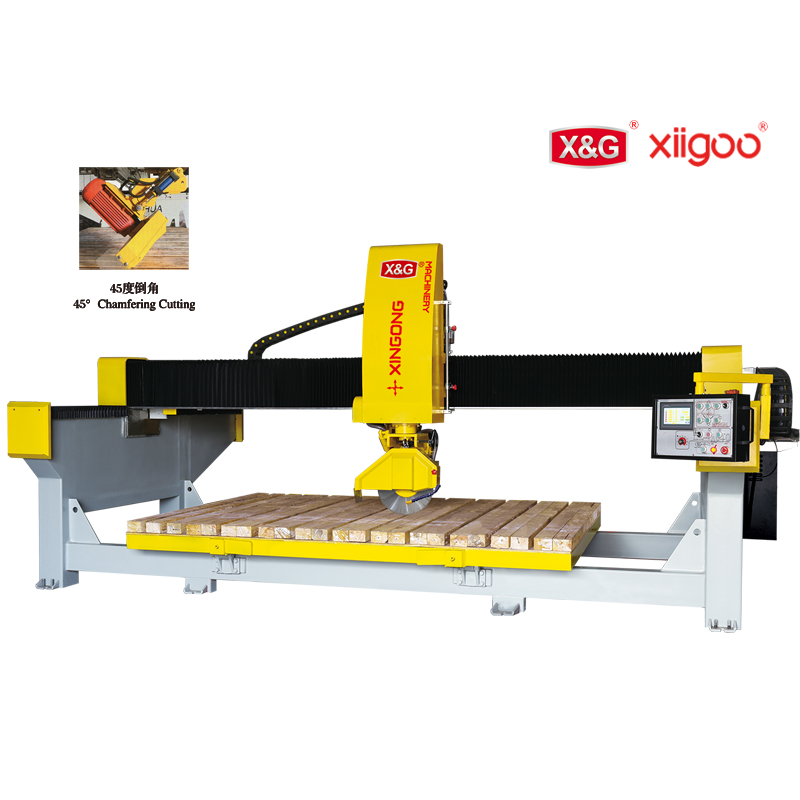
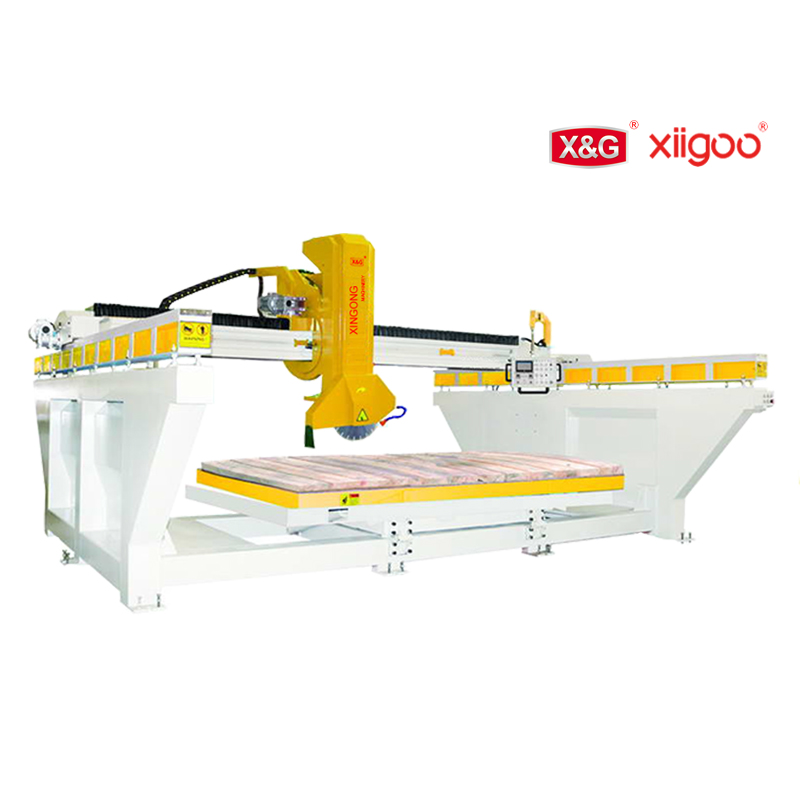
A CNC bridge saw improves stone cutting precision because it replaces human judgement on every cut with a measured, repeatable machine motion. On a manual or semi-automatic saw, the operator positions the blade by eye, clamps the slab, and checks the result — so the same nominal cut can drift by several millimetres from slab to slab. A CNC machine locks the cut into a digital toolpath and drives it with servo motors that read their own position thousands of times per second, sopositioning accuracy holds near ±0.1 mm and repeat positioning near ±0.02 mm regardless of who is on shift. The improvement is not one single feature but four stacked layers: a stiff frame that resists cutting forces, a closed-loop servo drive that corrects error in real time, software compensation that offsets known machine errors, and a fixed toolpath that removes set-up guesswork. Because accuracy lives in the control system and the frame — not in the axis count — a 4-axis and a 5-axis machine cut equally accurate flat edges; the fifth axis adds reach, not tolerance.
What "Precision" Actually Means on a Bridge Saw
Precision is three separate numbers, and buyers who treat them as one number get sold the wrong machine. Positioning accuracy is how close the blade lands to the commanded coordinate (commonly stated as ±0.1 mm). Repeat positioning is how closely the machine returns to the same spot on a second pass (often ±0.02 mm), and it matters most for book-matched and jointed work. Cut quality is the finished geometry — straightness along the edge, perpendicularity to the table, and chip-free finish — which depends on frame rigidity and blade condition as much as on the servos. A bridge saw can be repeatable but not accurate (it lands in the same wrong place every time), so ask a vendor for all three figures, not a single "±0.1 mm" claim.
The Four Precision Layers
Layer 1 — A rigid frame that resists cutting force
The bridge, gantry, and table must stay still while a diamond blade pushes through hard stone. Because a 3 cm granite slab can weigh about 518 kg at a density near 2,700 kg/m³, and engineered quartz runs 5–8% heavier, the frame must resist both the cut and the load without flexing. Cast or stress-relieved steel structures, ground linear guides, and preloaded carriages keep deflection out of the cut; a light frame flexes under load and turns into a wandering edge that no servo can correct.
Layer 2 — Closed-loop servo feedback
A servo motor with an encoder reports its true position continuously, so the controller can compare commanded and actual position and correct the difference in milliseconds. An encoder resolving to 1 µm lets the drive detect and cancel deviations far smaller than the finished tolerance, which is exactly why repeat cuts stay identical across a shift. Open-loop or stepper-driven machines cannot see their own error and therefore cannot correct it — the single biggest reason a genuine CNC saw outperforms a converted manual one.
Layer 3 — Software compensation
Every machine has small built-in errors: leadscrew pitch error, squareness deviation between axes, and thermal growth as the frame warms. Modern controllers store a compensation table and apply it automatically. Thermal compensation typically holds drift to about ±0.03 mm over an eight-hour shift by adjusting for frame expansion as the shop warms from morning to afternoon. Without this layer, an accurate morning cut can drift by the afternoon purely from heat — a problem operators know as the "first-cut-versus-last-cut" gap.
Layer 4 — A locked toolpath and constant feed
The controller interpolates the toolpath and holds a constant feed rate through the cut, so the blade does not slow, stall, or wander at corners. Because a constant feed keeps chip load steady, the blade wears evenly and the edge stays straight from the first slab to the hundredth. On a manual saw, feed rate changes with operator pressure, which is why manual edges show inconsistent polish and occasional blade marks.
Where Errors Still Come From — A Budget You Can Read
Manual formula: Total edge error = Mechanical geometry + Thermal drift + Blade wear + Material stress release.
Worked example: mechanical geometry ±0.05 mm; thermal drift ±0.03 mm over an 8-hour shift; blade wear ±0.02 mm per 100 m of cut; material stress release after cutting a stressed slab ±0.04 mm. Total worst-case ≈ ±0.14 mm. Because the total lands below the visible threshold, a CNC bridge saw produces seams that need no filler, which is the practical definition of "precise" on a stone shop floor.
CNC vs Manual and Semi-Automatic Cutting
| Aspect | Manual / Semi-Auto | CNC Bridge Saw |
|---|---|---|
| Positioning accuracy | Varies by several mm | About ±0.1 mm |
| Repeat positioning | Operator-dependent | About ±0.02 mm |
| Edge consistency | Drifts with fatigue | Held by servo |
| Complex profiles | Multiple re-fixturings | One locked toolpath |
| Output depends on | Skill of the operator | Parameters |
How to Verify Precision Before You Buy
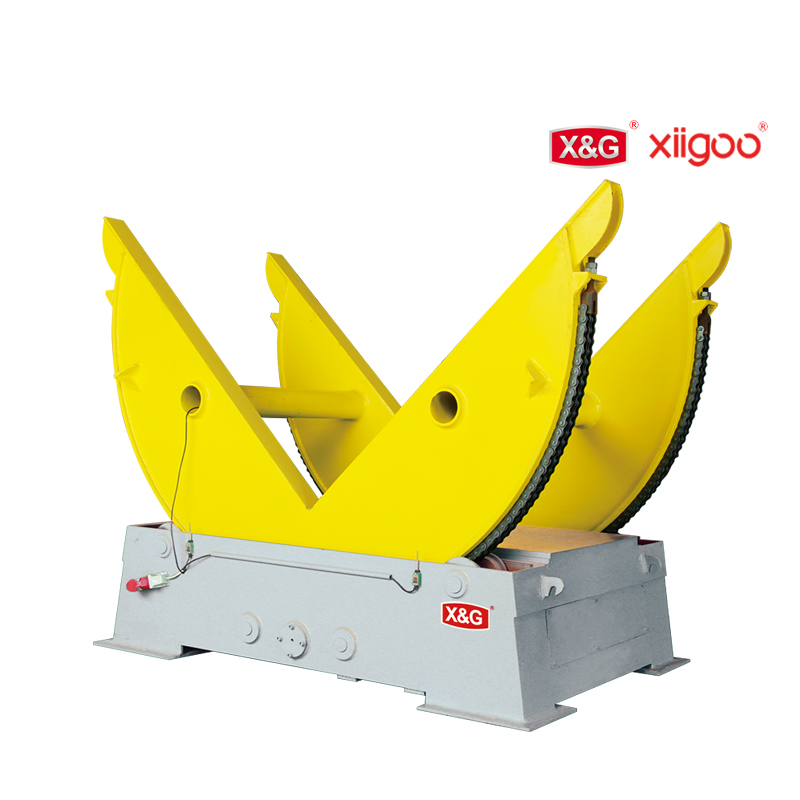
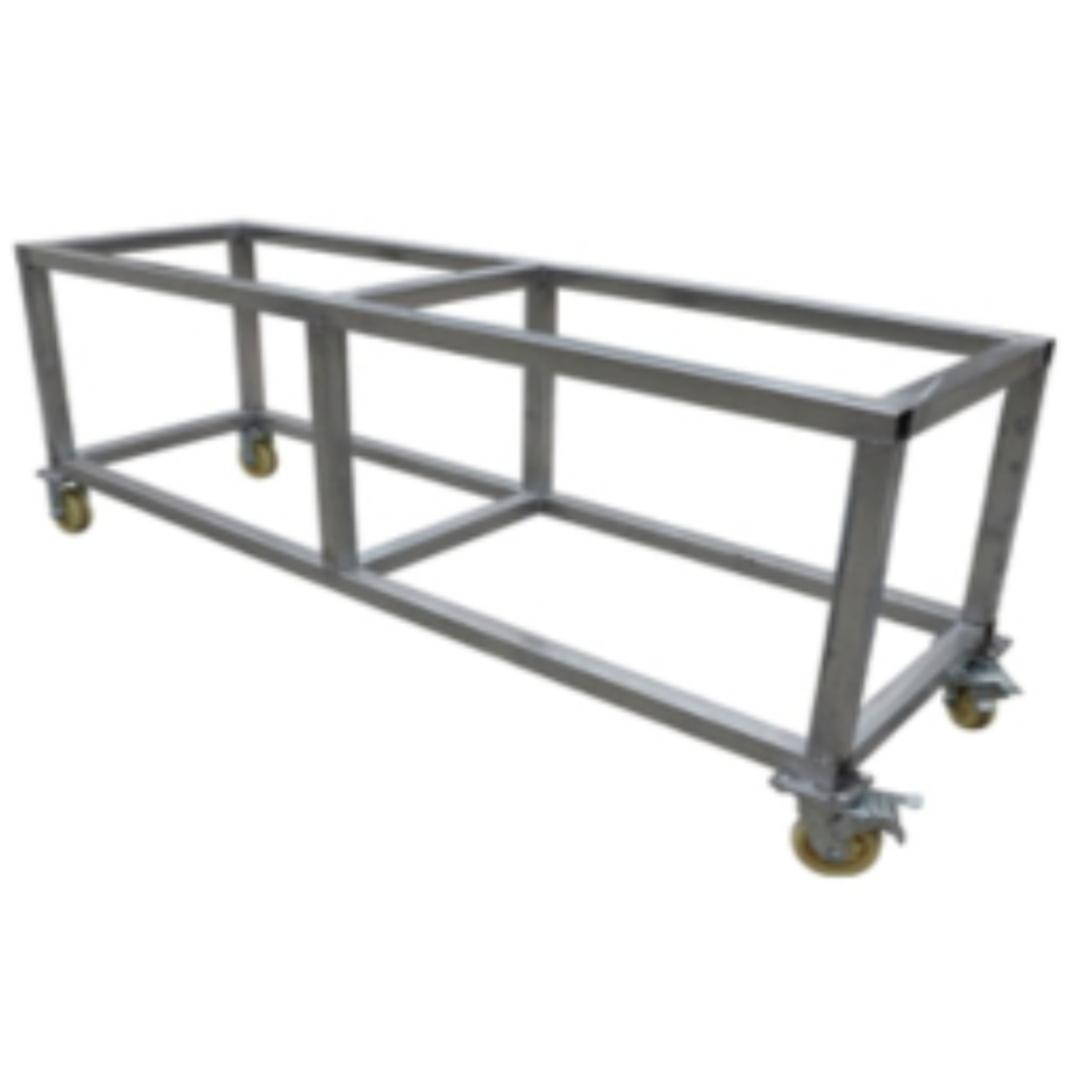
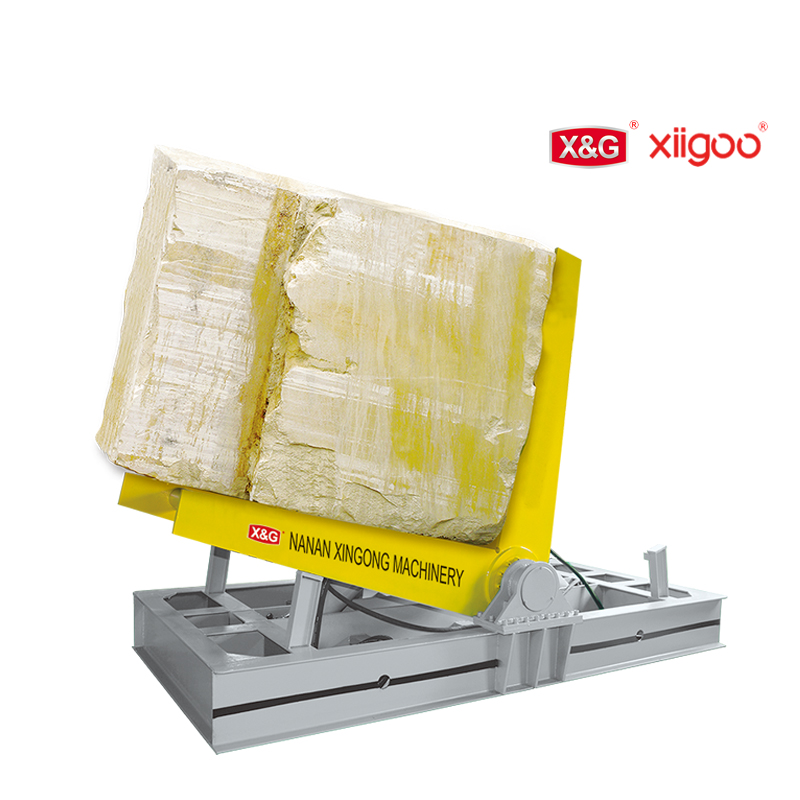
Request positioning and repeat-positioning figures taken to a recognised machine-tool test method such as the ISO 230 series. Then run three practical acceptance cuts: a long straight cut, a perpendicularity check, and a matched pair of slabs to measure the seam gap. Xiigoo's stone placement tools and stone turnover machines keep the slab positioned without a crane lift.
Keeping Precision Over Time
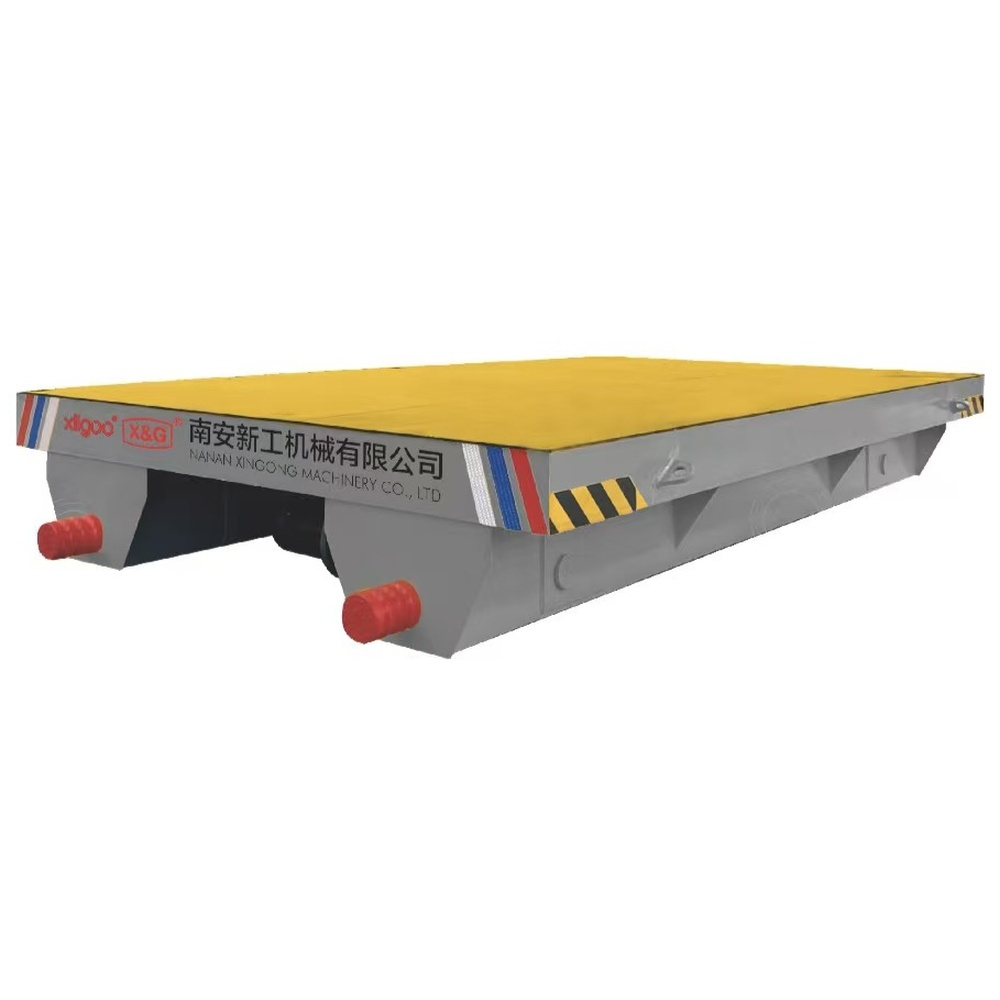
Accuracy is maintained, not bought once. Handling equipment such as the full handling lineup also protects precision indirectly. Industry guidance on repetitive manual work, such as NIOSH ergonomics, points the same way.
FAQ
How accurate is a CNC bridge saw compared with manual cutting?
A CNC bridge saw holds positioning accuracy within about ±0.1 mm and repeat positioning within about ±0.02 mm.
What causes a CNC bridge saw to lose precision over time?
Four drift sources dominate: mechanical geometry, thermal expansion, blade wear, and material stress release.
Do I need a laser interferometer to accept a machine?
Not always. A certified laser interferometer is best, but a practical acceptance test with a straight-edge cut and set-square check works.
Does a 5-axis bridge saw cut more accurately than a 4-axis unit?
Not on a flat cut. Accuracy comes from the servo loop, frame rigidity, and compensation.
How often should a CNC bridge saw be recalibrated?
Factory practice is a full geometry and positioning check every six to twelve months.