
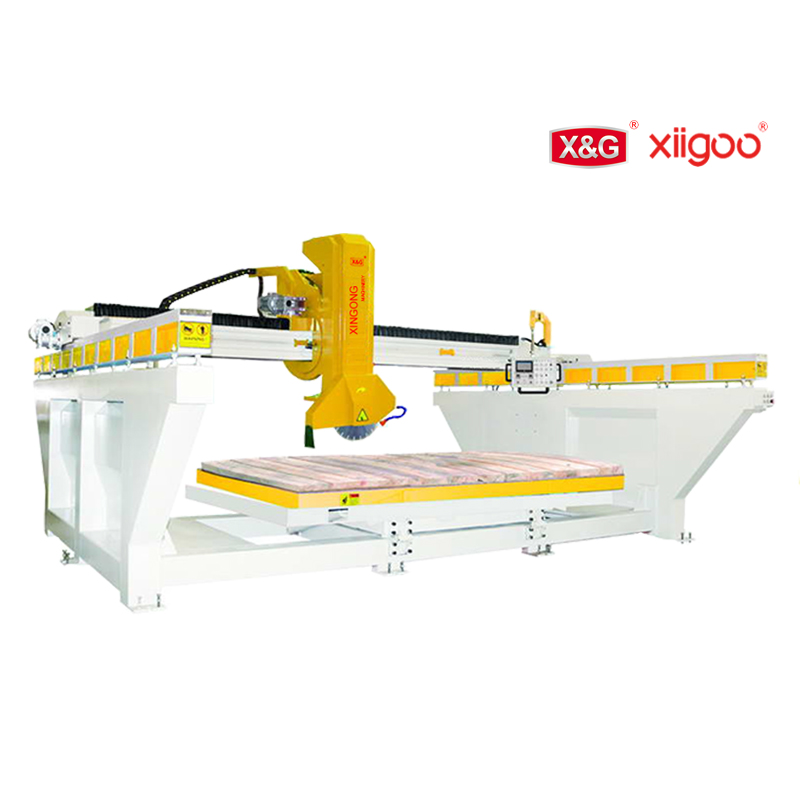
CNC Bridge Saw Maintenance Tips to Extend Machine Life
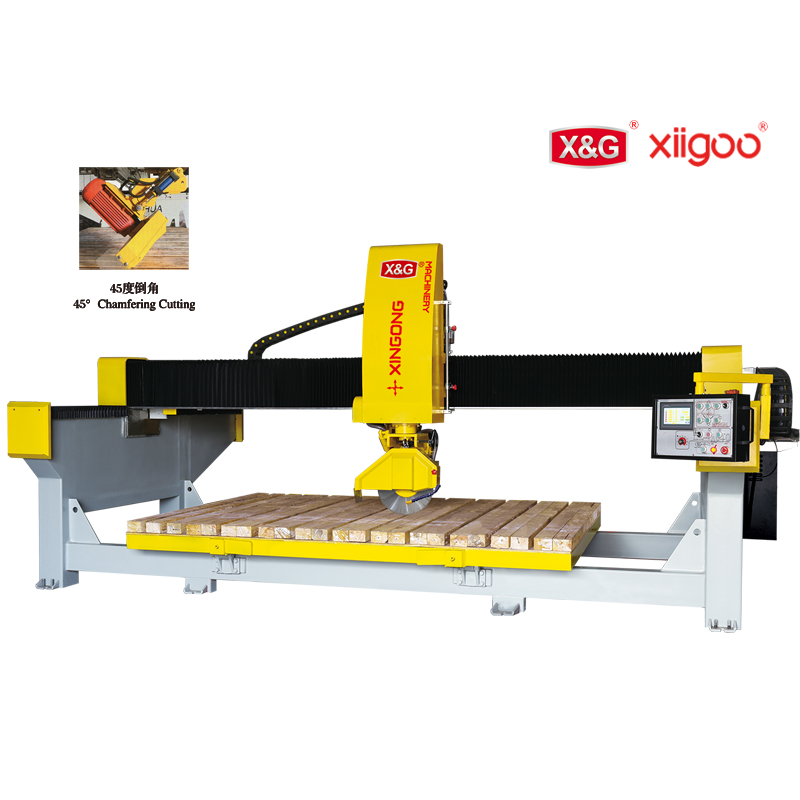
TL;DR: A Cnc Bridge Saw almost never dies suddenly — it wears out predictably, and your maintenance calendar decides whether you get 8 years or 20. Five systems consume themselves: guide rails and carriages, the rack-and-pinion drive, spindle bearings and grease, the water and coolant circuit, and the Diamond Blade. Most breakdowns trace back to the two cheapest causes on that list — dry guide rails and dirty coolant — because abrasive granite slurry turns a starved rail into a grinding paste. A disciplined routine costs roughly $600–1,600 a year in parts and about 40 labour-hours, while a single unplanned 6-hour stop costs a full day of output plus two idle operators. Ten minutes a day is the highest-return habit in the shop.
Quick Answer
To extend CNC bridge saw life, run a four-tier maintenance routine: a ten-minute daily check of rail lubrication, coolant flow, and blade condition; a weekly clean of the rack, tank, and guards; a monthly inspection of drive backlash, spindle temperature, and hoses; and a full annual service of geometry, lubrication lines, and electrical connections. Because abrasive stone dust and slurry reach every sliding surface, a granite shop running three shifts should compress the annual service into a six-month cycle, while a marble or low-utilisation shop can hold the twelve-month interval. The reason this matters more than any upgrade is that the failures that actually stop production are cheap and boring: a dry guide rail, a clogged coolant line, a glazed blade. A quality diamond blade yields roughly 600–900 linear metres of cut on 3 cm granite, so at 30 m a day that is a blade every four to six weeks — planned, inexpensive, and entirely avoidable as a mid-shift emergency. Keep a log of cut times for a standard material and thickness, and the machine will tell you what it needs before it fails.
What Actually Wears Out on a CNC Bridge Saw
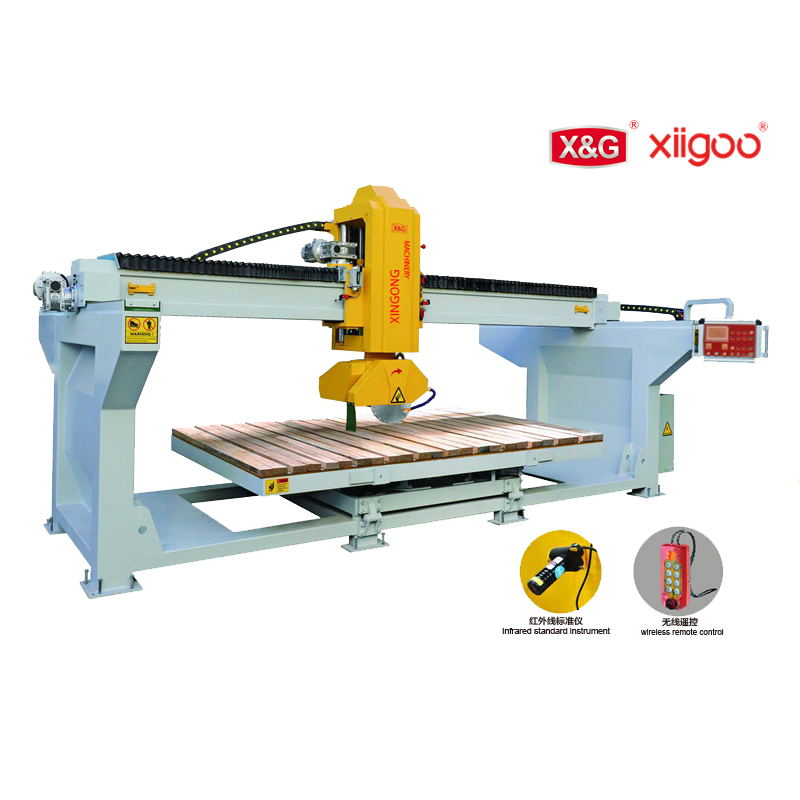
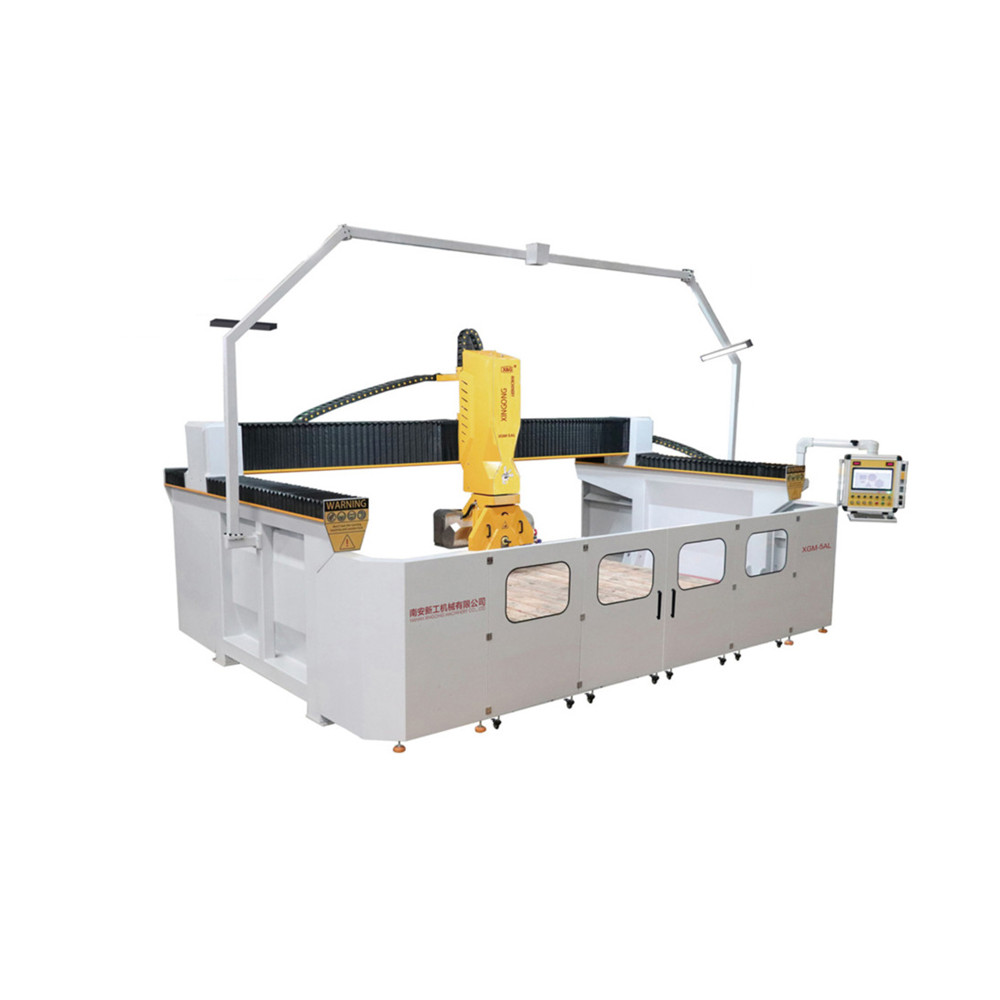
Buyers worry about the electronics and the spindle. In practice those are the last things to fail. Wear concentrates in five systems, and four of them are consumable by design.
The guide rails and carriages carry the whole load
Every cut slides the bridge along the rails while the slab sits on the table, and a 3 cm, 3.2 × 2.0 m granite slab weighs about 518 kg at a density near 2,700 kg/m³. Because the carriage sees the full cutting force plus the weight it moves, a rail that loses its film of grease wears several times faster and starts to show as vibration long before it shows as a dimension error. This is the single most neglected surface on the machine and the cheapest to protect.
The rack-and-pinion drive sets your repeatability
The rack and pinion convert motor rotation into position, so accumulated backlash here is what turns a precise machine into one that misses dimension on jointed work. Because backlash grows gradually, it is invisible on a single cut and obvious on a matched pair of slabs that no longer fit, which is why measuring it monthly is cheaper than discovering it on a client's order.
Spindle bearings and grease have a finite clock
Spindle bearings live in a sealed, preloaded assembly and depend entirely on their grease charge, which has both an operating-hour limit and a shelf life. Because heat is the failure mechanism, a spindle that runs hotter than its normal baseline is asking for grease, and one that whines is asking for a technician — not for a heavier cut.
The coolant circuit is where most damage hides
Water carries heat away and flushes chips out of the kerf, and it also carries the abrasive fines that will grind your machine if they are recirculated. Because granite slurry is abrasive rather than merely dirty, a tank that is not cleaned and a filter that is not changed turn the coolant into a lapping compound, and the damage shows up later on the rails and the blade bond rather than at the tank.
The blade is a consumable, not a component
A diamond blade does not fail — it dulls, and a dull blade loads the spindle, raises heat, and produces a rougher edge. Because a glazed blade cuts slower rather than stopping, it is usually tolerated far too long, quietly costing machine-hours and finish quality while the operator compensates with pressure.
The Maintenance Schedule That Works
Four tiers, matching effort to consequence. The intervals below assume a single-shift granite shop; compress them where the machine runs hard stone around the clock.
The daily ten minutes
- Wipe and re-lubricate the guide rails and check the automatic lubrication reservoir level.
- Confirm coolant flow at the nozzle and check that the tank is not carrying heavy sediment.
- Look at the blade segment for glazing, missing segments, or a worn flange seat.
- Listen for a changed spindle note and check the spindle housing by hand for abnormal warmth.
- Record the cut time for one standard material and thickness in a simple log.
The weekly clean
Clean the rack teeth and pinion, flush and top up the coolant, clear slurry from the tank and guards, and inspect hoses and fittings for chafe. Because abrasive fines settle rather than stay suspended, a weekly flush removes material that a daily top-up would simply recirculate.
The monthly inspection
Measure drive backlash on both axes, check table and bridge squareness with a set-square, test the coolant concentration and pH, inspect electrical connections for heat marks, and verify that all guards and interlocks operate. Grease the spindle where the design provides a service point.
The annual service
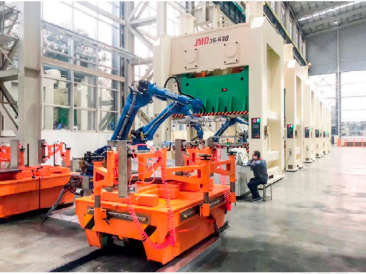
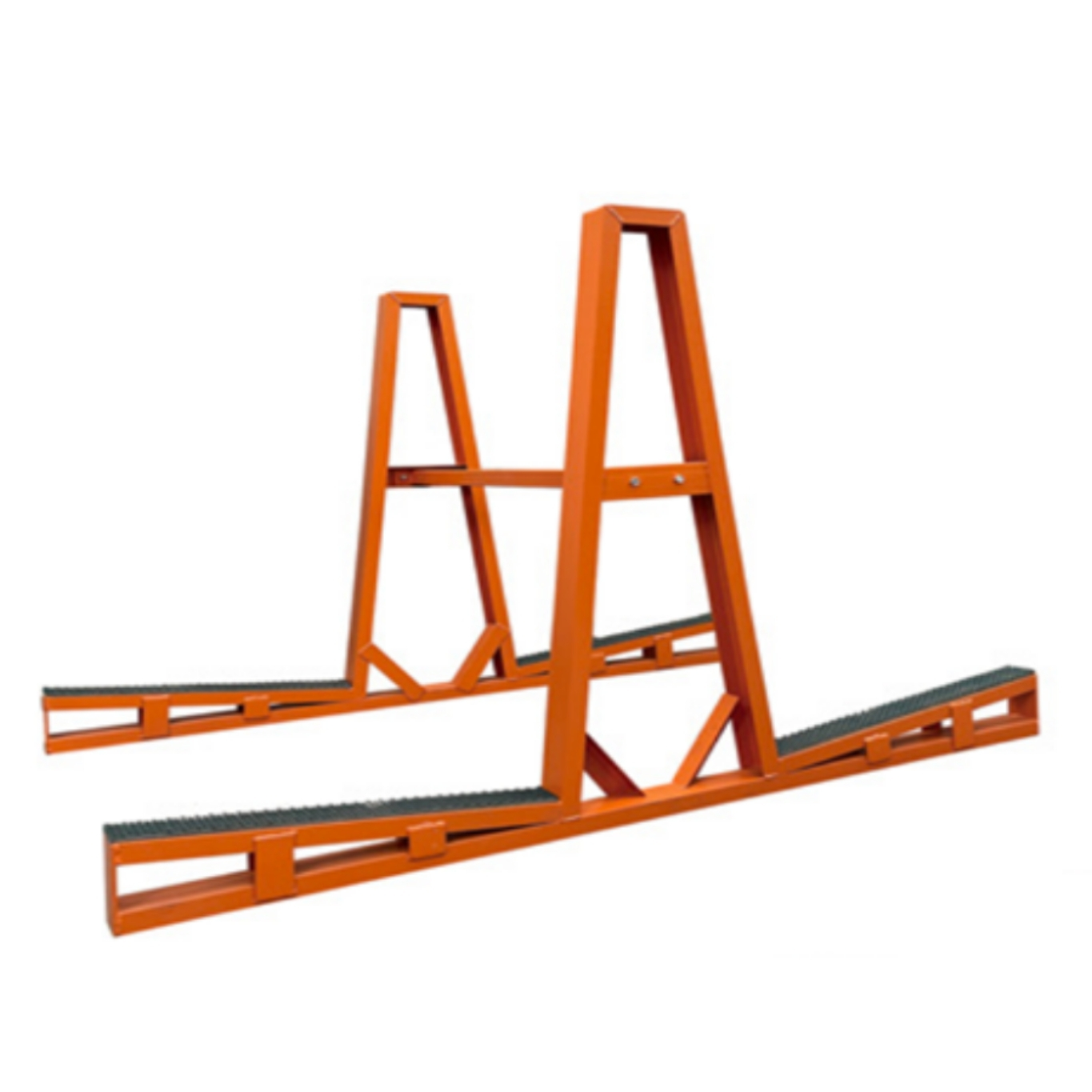
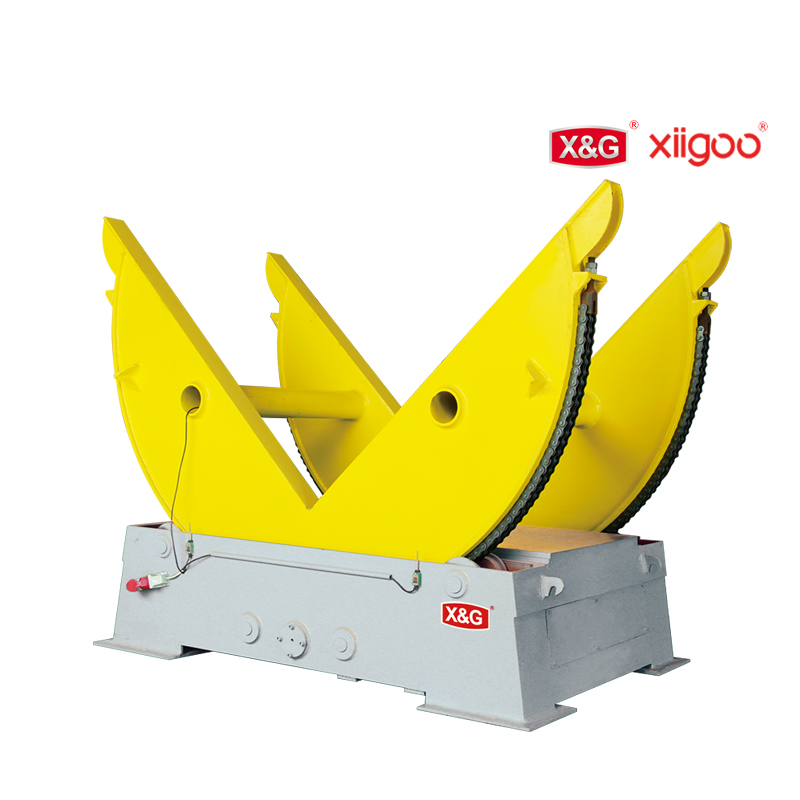
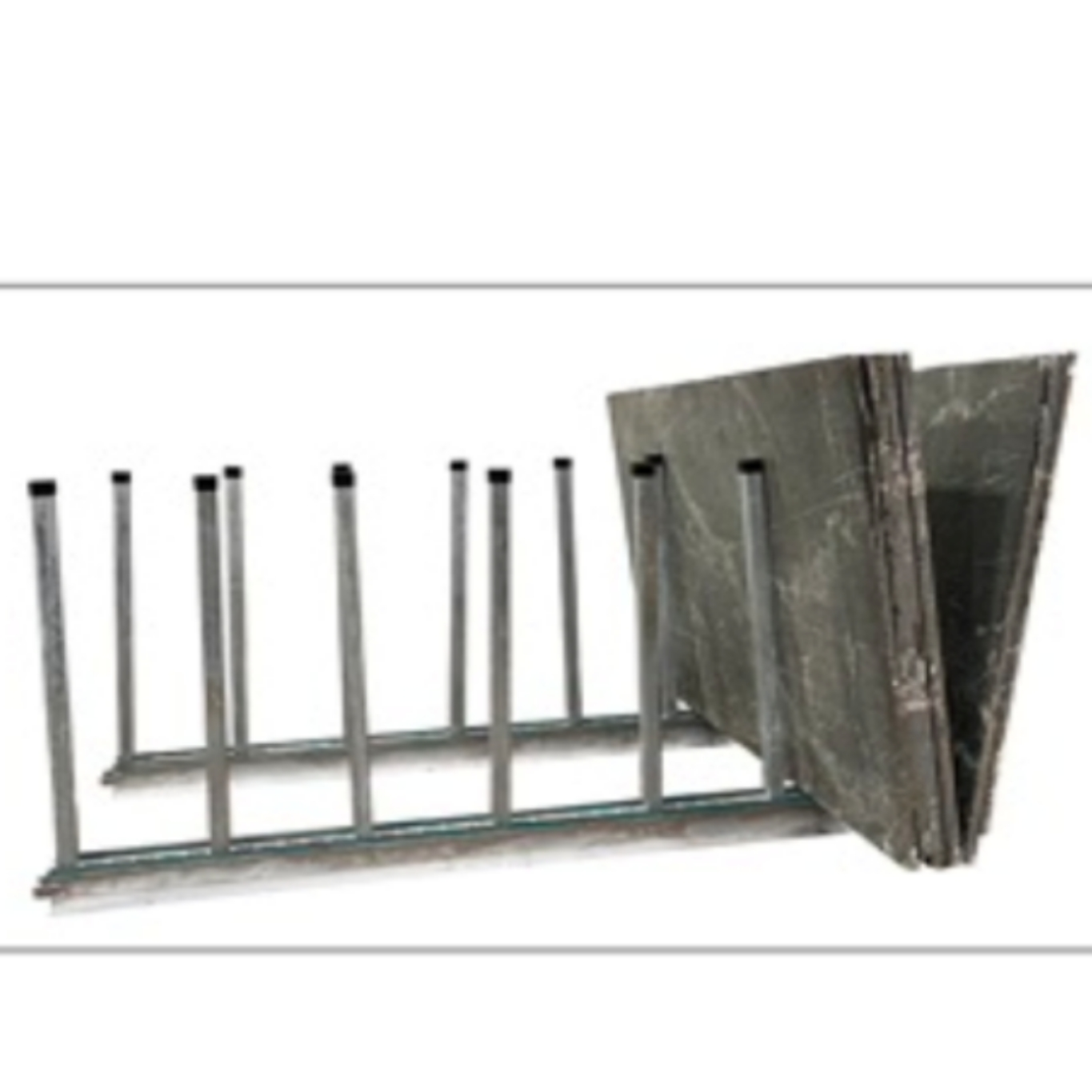
Full geometry and positioning calibration, lubrication-line replacement, spindle-bearing assessment, controller backup and diagnostics review, and a complete electrical inspection. Handling equipment deserves the same discipline — a stone turnover machine and stone placement tools that feed the saw should be inspected on the same calendar so a handling failure does not undo a well-maintained cutting line.
Side by Side
| Factor | Reactive (run to failure) | Preventive (calendar-based) | Predictive (condition-based) |
|---|---|---|---|
| What triggers work | The machine stops | A fixed interval arrives | A measured trend moves |
| Downtime pattern | Unplanned, mid-shift | Planned, short | Planned, pre-scheduled |
| Spare parts | Emergency, expedited | Scheduled, standard price | Ordered before failure |
| Part life used | Runs to destruction | Replaced with life left | Replaced near true limit |
| Skill required | Whoever is on shift | Operator level | Technician and instrument |
| Best fit | Non-critical, cheap, safe parts | Most stone shops, most machines | High-utilisation, bottleneck machines |
What Maintenance Really Costs — A Hand-Calc You Can Do on Paper
Maintenance budgets get argued about because nobody writes the arithmetic down. Two formulas settle the conversation, and both use numbers you already have.
Manual formula 1 (blade consumption): Annual blade cost = (Daily cut length in m × Working days) ÷ Blade life in m × Blade price.
Worked example: a shop cutting 30 m a day over 250 working days cuts 7,500 m a year. At a granite blade life of 800 m, that is 7,500 ÷ 800 ≈ 9.4 blades a year. At an illustrative $220 a blade, blade spend lands near $2,070 a year — a planned, predictable line item.
Manual formula 2 (cost per operating hour of a wear part): Cost per hour = (Part price + Labour) ÷ Service life in hours.
Worked example: a spindle grease service kit at $120 fitted in half an hour, on a 1,000-hour interval, works out at about $0.13 per operating hour. Because the arithmetic produces cents per hour, the honest conclusion is that planned maintenance is not a cost centre — it is the cheapest insurance in the building.
Now put the two sides together for a single-shift shop: roughly $2,700 in parts ($2,070 of blades plus about $600 of lubricants, filters, and hoses) and about 40 labour-hours a year, some $3,700 all-in on illustrative numbers. Compare that with one unplanned stop. A 6-hour failure in the middle of a shift does not simply lose 6 hours of cutting — it loses a full day's output, because the day's remaining cut sequence cannot be re-sequenced around it. It also idles two operators for 6 hours (12 labour-hours), and if a part must be air-freighted the expedited premium can exceed the part's standard price outright. Because a single avoided stoppage consumes a large share of the year's planned spend, the routine pays for itself on the first failure it prevents. Substitute your own cut lengths, blade prices, and wage rates before you take the numbers to a budget meeting — these figures are illustrative and should be checked against your own invoices.
Five Signals That Mean Stop Cutting Now
A well-run saw warns you first. Treat any of these as a maintenance trigger rather than an operator challenge.
- Cut time rises about 10% on the same material and thickness. This is the earliest and most reliable signal, and it usually means a glazed or dulled blade or a dragging carriage. Keep the log from the daily check precisely so this comparison is possible.
- Coolant flow looks weak or the tank is heavily sedimented. Starved coolant causes blade glazing and spindle heat at the same time, so it is the highest-consequence cheap fault on the list.
- Vibration appears, or the finished edge changes character. New vibration points to a worn carriage, a loose blade flange, or a damaged bearing — all of which worsen quickly once they start.
- Repeated cuts miss dimension on jointed or book-matched work. This is backlash or geometry drift: a machine that no longer returns to the same place cannot close a seam, no matter how good the finished surface looks.
- The spindle runs hotter or noisier than its baseline. Stop and call a technician. Bearing damage is one of the few repairs that is genuinely expensive, and continuing to cut converts a grease service into a spindle rebuild.
When Running to Failure Is the Right Call
Preventive maintenance is not a religion, and spending on the wrong parts wastes money that a better-run shop would put elsewhere. For non-critical, low-cost parts with no safety function — a coolant hose, a work lamp, a door switch on a non-guarded panel — planned replacement can cost more in labour than the part is worth, so run them to failure and keep a spare on the shelf. If the machine is scheduled for replacement within a year, heavy preventive spend will not pay back; run it, protect the critical spare list, and put the budget into the replacement specification instead. And for low-utilisation shops running under about 500 machine-hours a year, calendar intervals matter far more than hour counters, because grease ages on the shelf as well as in service — a light annual service is the honest recommendation there, not a monthly programme.
One category never qualifies for run-to-failure. Anything with a safety function — guards, interlocks, brakes, emergency stops, and lifting points — must be inspected on schedule, because the consequence is not a lost shift but an injury, and the regulatory basis is explicit: isolation and lockout before any maintenance inside a guarded area, per the OSHA control of hazardous energy standard. Repetitive manual handling is the other risk that maintenance discipline reduces, since a machine that is easy to service needs fewer improvised, unguarded interventions — the same conclusion reached in NIOSH ergonomics guidance and reflected in BLS injury statistics for the sector. Where a shop wants an external benchmark for material handling practice, the MHI publishes reference material that pairs well with the stone-specific guidance of the Natural Stone Institute. A slab transport cart that moves the load cleanly and a full handling lineup maintained on the same calendar both reduce the number of times anyone has to reach into the machine's working envelope.
FAQ
How often should a CNC bridge saw be serviced?
Operate a four-tier routine: a ten-minute daily check covering rail lubrication, coolant flow, and blade condition; a weekly clean of the rack, tank, and guards; a monthly inspection of drive backlash, spindle temperature, and hose condition; and a full annual service of geometry, lubrication lines, and electrical connections. Shops running hard granite three shifts a day should treat the annual service as a six-monthly one because abrasive dust accelerates wear.
What causes most CNC bridge saw breakdowns?
The two cheapest causes do the most damage: dry or contaminated guide rails, and dirty coolant. Because abrasive stone slurry acts as a grinding paste, a starved guide rail wears several times faster than a properly lubricated one, and a clogged coolant circuit causes blade glazing and spindle heat. Neither failure comes from the expensive components buyers worry about.
How long should a diamond blade last on a granite bridge saw?
Expect roughly 600–900 linear metres of cut on 3 cm granite from a quality blade, with the range set by bond hardness, feed rate, and water flow rather than by price alone. The practical gauge is not the calendar but the clock: when cut time for the same material and thickness rises by about 10%, the blade is glazing or the diamonds are dulled, and it is time to dress or replace it.
Can a stone shop do CNC bridge saw maintenance in-house?
Operator-level work — lubrication, cleaning, coolant changes, blade changes, and cut-time logging — belongs in-house because it is fast and frequent. Spindle bearings, drive backlash adjustment, controller diagnostics, and geometry calibration should go to a trained technician. Any intervention inside a guarded area requires the machine to be isolated and locked out first.
What is the single best way to extend CNC bridge saw life?
Control the two cheap variables — lubrication and water quality — and log cut times so you notice drift before it becomes a failure. Because guide-rail friction and abrasive slurry cause the majority of wear, clean coolant and a correctly greased rail extend the life of the expensive components far more than any upgrade will.