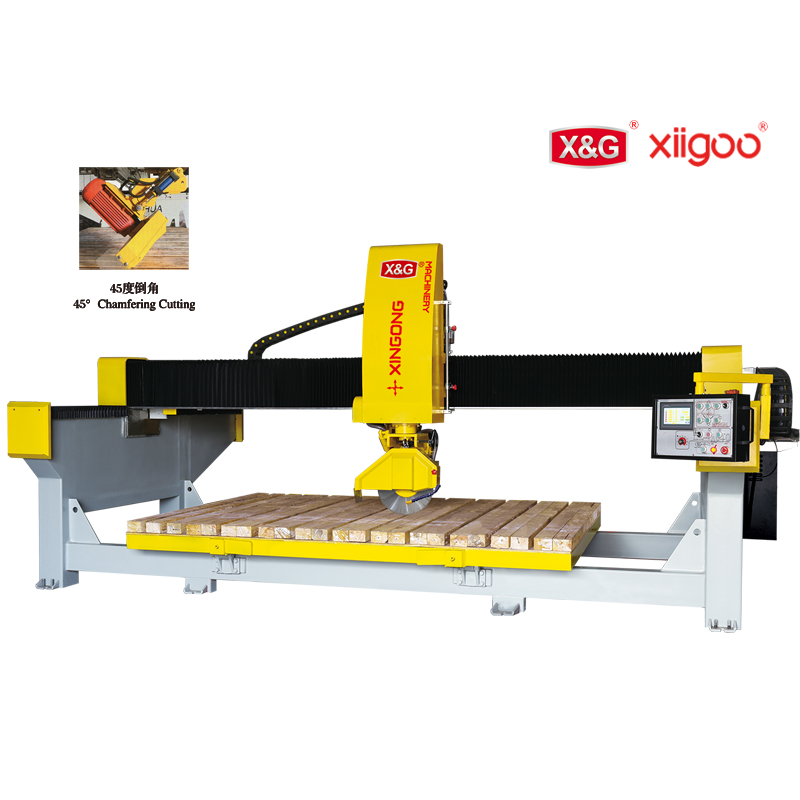
4-Axis Bridge Saw vs 5-Axis: Which Stone Cutter Is Best?
TL;DR: Pick a 5-axis CNC bridge saw when your work includes compound miters, 3D edges, sink cut-outs, or waterfall panels in real volume, because the tilting head removes manual slab flips and second setups. A 4-axis machine is the smarter buy for straight cuts and single-angle (45°) miters at high volume on a tighter budget. The price gap is real (illustratively ~$18,000), but the payback often lands inside 12 months once labor and breakage savings are counted.
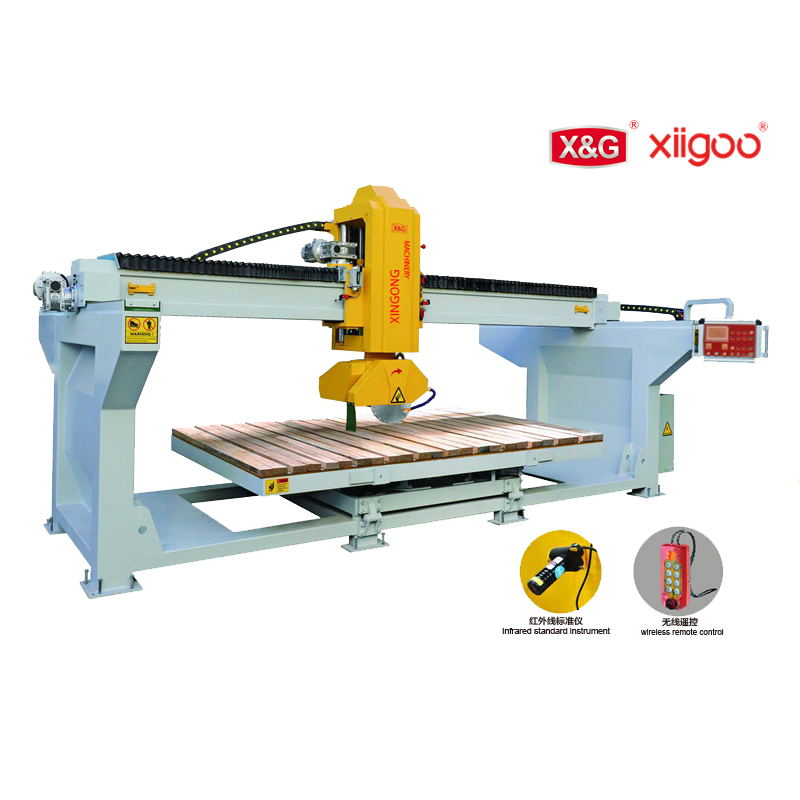
Quick Answer
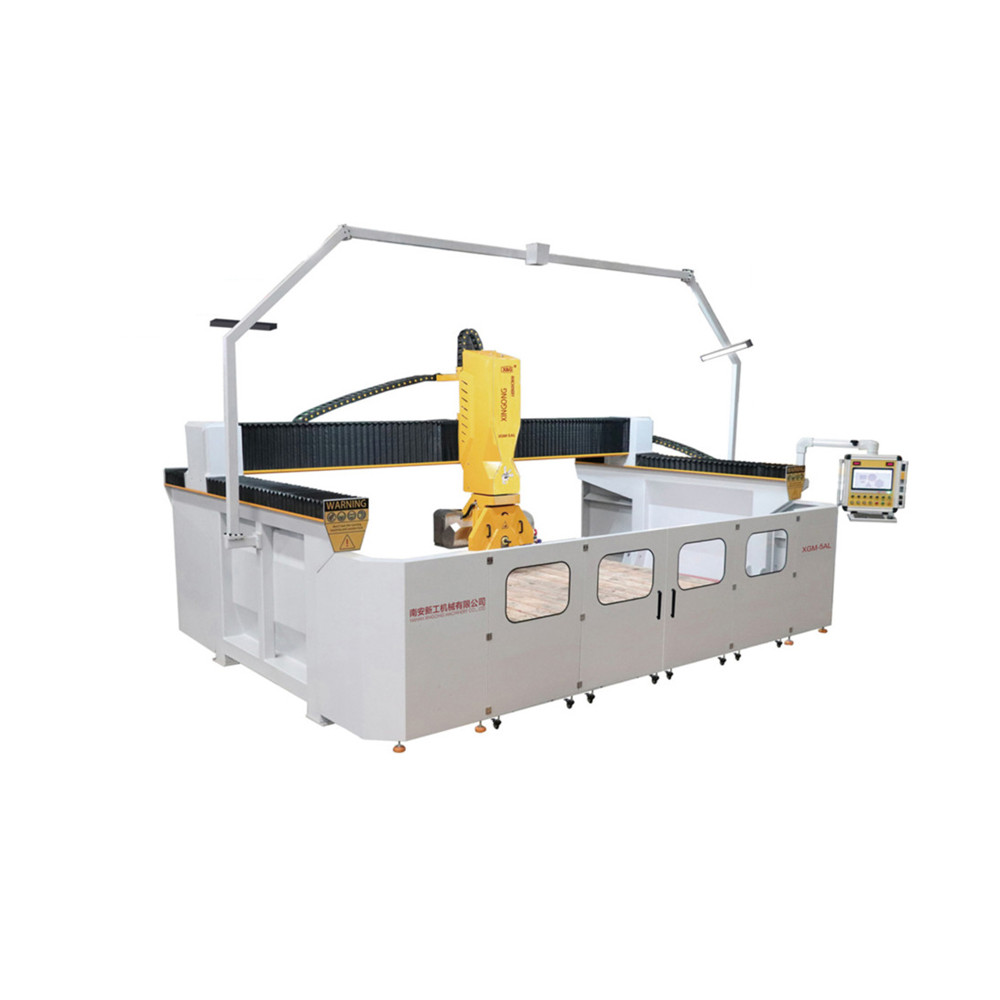
A 5-axis Cnc Bridge Saw is the better cutter when your jobs include compound miters, 3D-profiled edges, sink cut-outs, or stair treads, because its tilting head reaches any compound angle in one setup while a 4-axis head can only rotate in a fixed vertical plane. A 4-axis saw stays the smarter buy for shops doing mostly straight and single-angle cuts, since it delivers the same flat-cut accuracy for 30–50% less. The decision therefore turns on job mix, not on a simple “newer is better” rule: count how many slabs per month need a second setup on a 4-axis, then run the payback formula below.Neither machine is “more accurate” on a flat cut — the fifth axis buys capability and labor, not tighter tolerances.
What the Axis Count Actually Means
Every CNC bridge saw shares three linear axes: the bridge travels in X, the carriage in Y, and the cutting head rises and falls in Z. Those three moves cut any straight line in the horizontal plane. The “4th” and “5th” axes are rotary and tilt motions of the cutting head, and they are what separate the two tiers.
A 4-axis machine adds head rotation — the blade assembly spins around a vertical axis so it can cut 0–45° (sometimes 0–90°) miters and bevels automatically, without an operator flipping the slab. A 5-axis machine adds a second motion: head tilt. With rotation plus tilt, the blade can address the slab from essentially any compound angle, so it cuts 3D-profiled edges, full waterfall miters, sink and faucet cut-outs, and steep compound bevels in a single fixturing. Because a typical 3 cm granite slab weighs about 518 kg, and a 2 cm slab about 276 kg (Natural Stone Institutedensity basis ~2,700 kg/m³), manual flipping is both slow and a real handling hazard — which is exactly the labor the 5-axis removes. Quartz runs 5–8% heavier still, so the same argument strengthens for engineered stone.
The Core Argument — When the Fifth Axis Pays
The decisive value of the fifth axis is the elimination of manual re-fixturing. On a 4-axis saw, a waterfall miter or a sink cut-out often means cutting one face, stopping, rotating or flipping a 518 kg slab by crane or with a second operator, then cutting the second face — a second setup that adds handling minutes and breakage risk to every complex slab. A 5-axis saw does the whole profile in one pass, because the head simply leans and turns to wherever the toolpath points. Fewer setups mean less handling, and less handling means less breakage of heavy slabs and fewer hours of skilled labor per job.
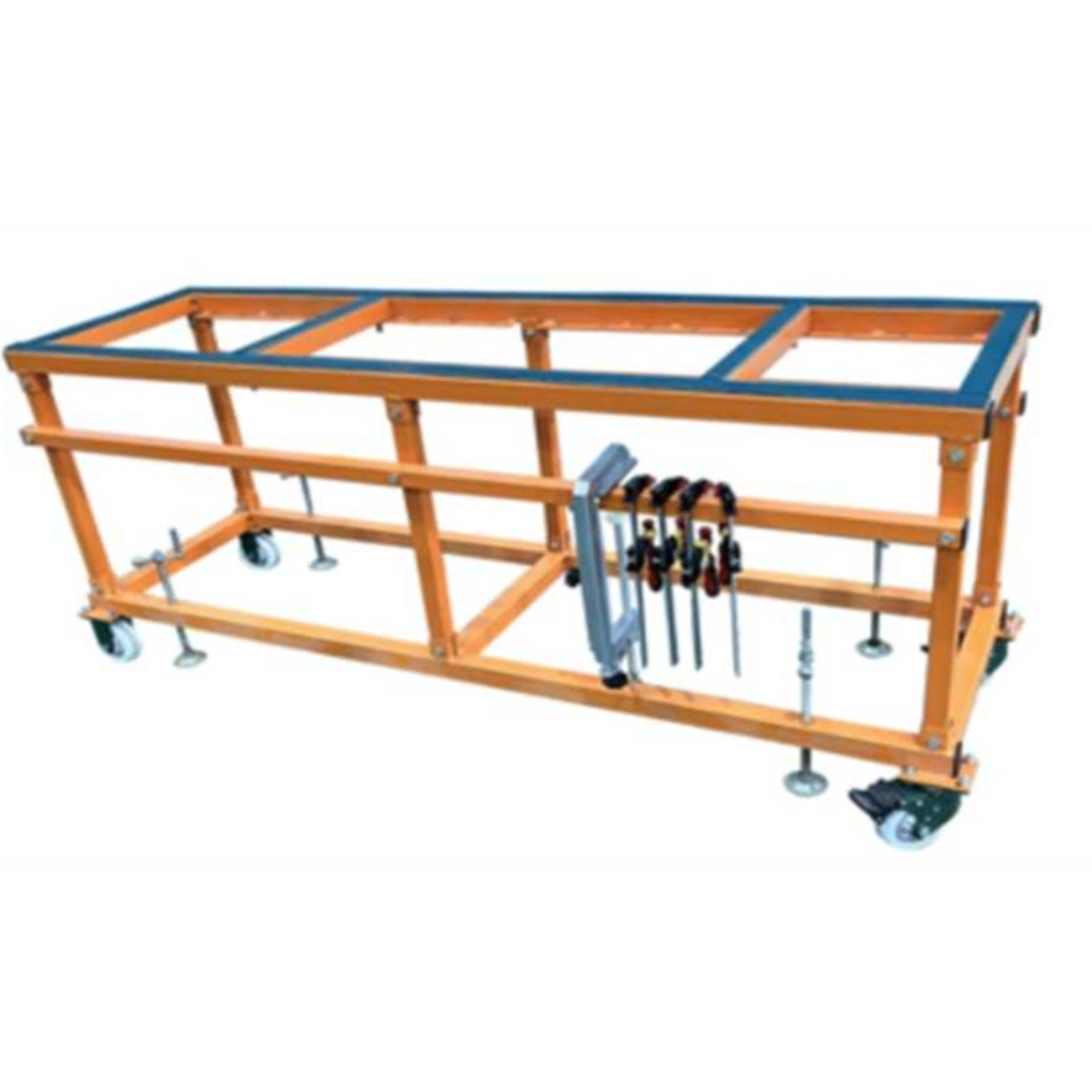
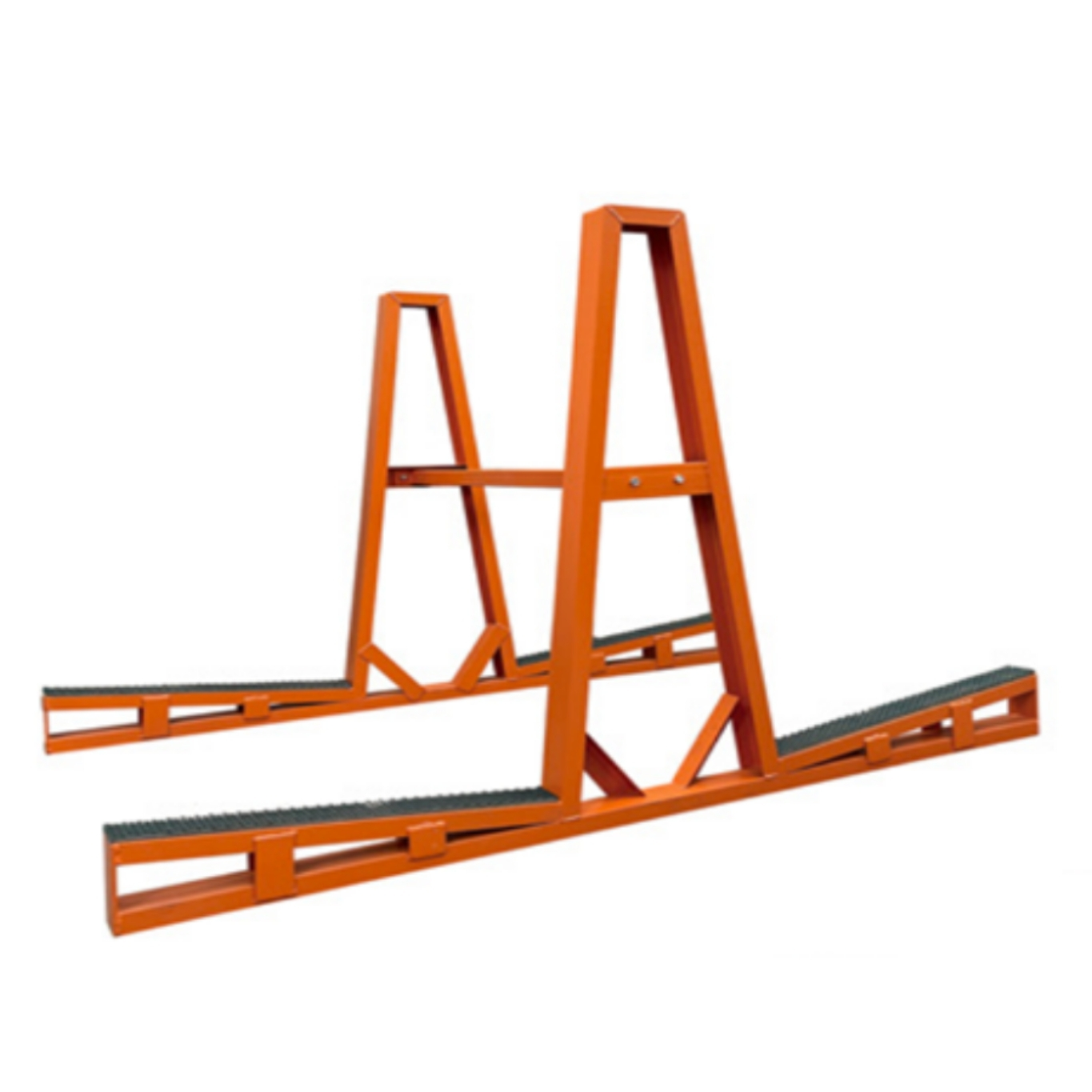
Throughput follows the same logic. One operator can supervise two or three 5-axis machines, because auto-positioning removes the manual steps that otherwise pin a second person to each saw. For precise on-table positioning of heavy slabs, our stone placement tools remove the crane lift entirely, so the labor case for 5-axis gets stronger the heavier your typical slab. On a 4-axis miter line, that second hand is often still required. OSHA machine-guarding guidance also favors keeping operators out of the cutting zone, which the 5-axis achieves by automating the motions a 4-axis leaves to people.
Side by Side
| Capability | 4-Axis | 5-Axis |
|---|---|---|
| Head motion beyond X/Y/Z | Rotation only | Rotation + tilt |
| Standard 45° miter | Yes (auto) | Yes (auto) |
| Compound / 3D angles | No second setup | Yes, single setup |
| Sink / faucet cut-outs | Limited | Full profile |
| Waterfall miters | Manual flip | One pass |
| Setups per complex slab | 2+ | 1 |
| Operator need | 1–2 per machine | 1 per 2–3 machines |
| Typical price premium | Baseline | ~30–50% more |
| Best job mix | Straight + 45° volume | Complex / architectural |
The Cost Question — A Payback You Can Do by Hand
Up front, the 5-axis costs more, and for the first jobs it does. The honest comparison is payback, not sticker price, and you can calculate it without any software. Treat the price gap as illustrative — say ~$18,000 between comparable 4-axis and 5-axis units — then count the monthly savings from dropped labor and fewer broken slabs.
Manual formula: Payback (months) = (5-axis price − 4-axis price) ÷ [ Slabs/month × (Extra handling minutes per slab ÷ 60 × Labor $/hour) + Scrap $ saved/month ].
Worked example: a shop cuts 200 slabs/month, and on a 4-axis saw each complex slab needs an extra 20 minutes of flipping/re-fixturing at $25/hour — that is $8.33 saved per slab, or $1,660/month in labor. If the 5-axis also prevents one broken 3 cm granite slab per month at ~$300 of material, add $300/month. Total saving ≈ $1,960/month, so $18,000 ÷ $1,960 ≈ 9.2 months to break even. Above roughly 150 complex slabs/month the payback compresses under a year; below about 40, the gap usually outlasts the buying decision. Because the model is yours to tune, swap in your own slab count, labor rate, and breakage history before you sign.
Five Questions That Settle It
Answer yes to two or more and the 5-axis is the rational buy, not a luxury:
- Do more than 30% of your slabs need miters steeper than 45° or compound angles?
- Do you regularly cut sink cut-outs, stair treads, or 3D-profiled edges?
- Are you short on skilled labor, or paying overtime for second operators at the saw?
- Is breakage of heavy granite or quartz slabs a recurring material cost?
- Is your job mix moving upmarket — architectural, waterfall, or bespoke commissions?
Most shops that reach for the 5-axis answer yes to three or more. The migration can be staged: keep the 4-axis for straight-volume work and add a 5-axis for the complex jobs, so each machine plays to its strength while the payback clock runs only on the premium slice of work.
When the 4-Axis Is the Right Call
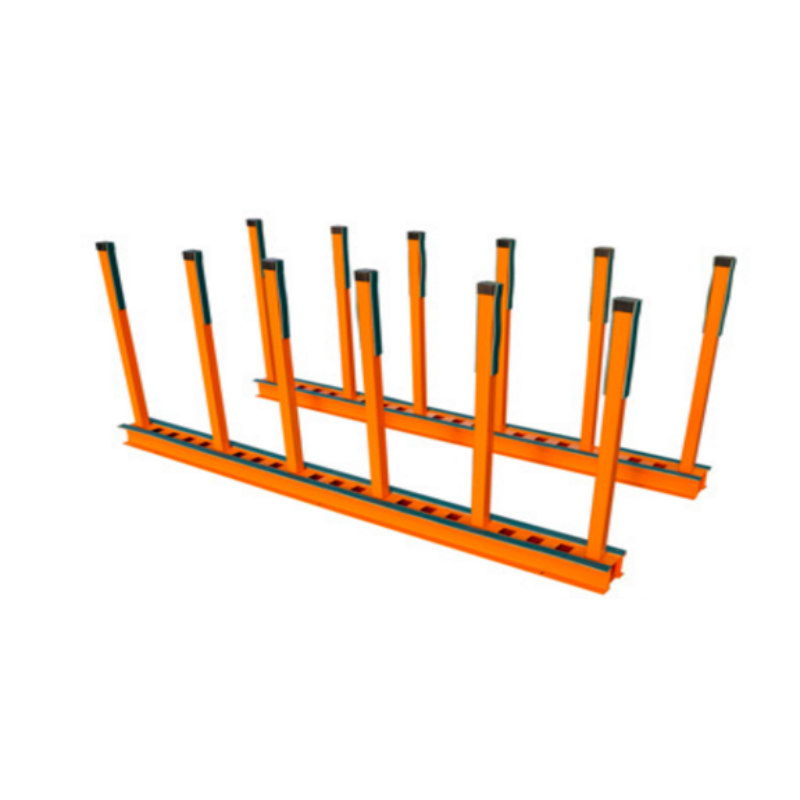
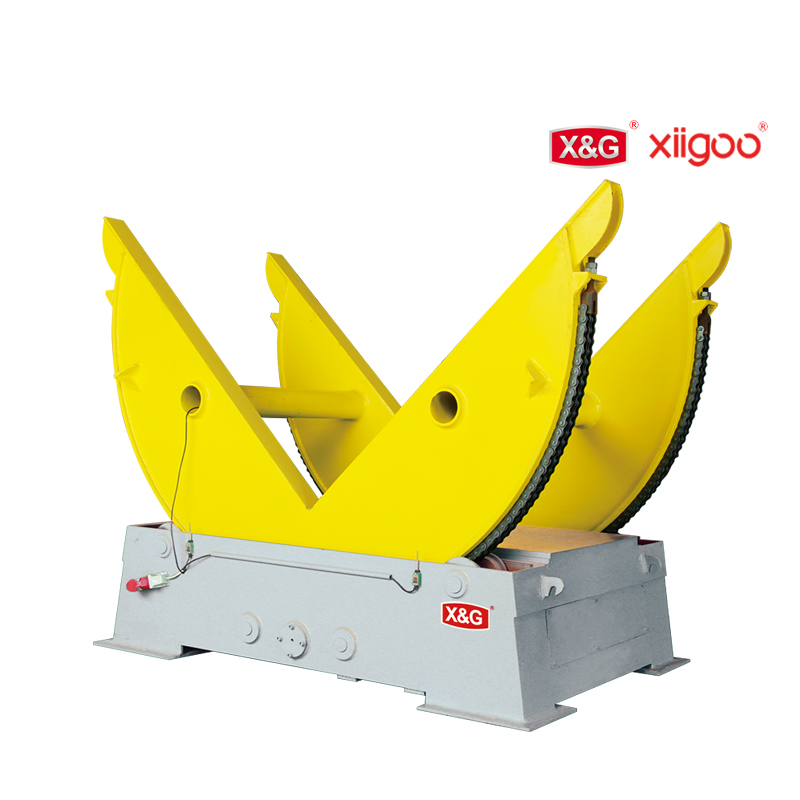
The 4-axis is not a compromise — it is the correct tool for a defined job mix. If your work is dominated by straight cuts and standard 45° eased or bevel edges, the 5-axis adds cost you will not convert into capability. New shops still building volume, price-sensitive operations, and teams cutting simple materials with no 3D work get the same flat-cut accuracy for 30–50% less capital. A skilled operator can still rotate the slab by hand for occasional angles, but on a 518 kg granite slab that step is slow and risky, so reserve it for rare one-offs rather than daily production. To move those slabs to and from the saw safely, review the full handling equipment lineup and stone turnover machines that flip slabs without a second person in the danger zone.
FAQ
Is a 5-axis bridge saw harder to program?
No more than a 4-axis unit. Modern controllers read CAD/CAM profiles, and once the edge is drawn the head motion is automatic. Operator training runs in days, not months (MHI material-handling guidance points the same way on shop-floor automation).
Does a 4-axis saw cut 45-degree miters?
Yes. Head rotation handles standard 45° miters automatically. It cannot cut compound angles, 3D profiles, or steep miters in a single setup the way a 5-axis tilting head can.
How much more does a 5-axis bridge saw cost?
Illustratively 30–50% above a comparable 4-axis unit. For miter-heavy shops the payback often lands inside 12 months once labor and breakage savings are counted.
Can one operator run a 5-axis line?
Yes. Auto-positioning means one operator can supervise two or three machines, whereas 4-axis miter work often needs a second hand per machine to flip and re-fix heavy slabs (NIOSH ergonomics notes that removing manual lifts also reduces strain injuries).
Do I still need a waterjet if I buy 5-axis?
For thin metals or very intricate inlays, maybe. For stone profiling, sink cut-outs, and waterfall miters the 5-axis bridge saw replaces a large share of waterjet work — without the abrasive-media cost.